

Have you ever wondered what languages are spoken in California?
California, also known as the Golden State is best known for its beautiful beaches, national parks, and vast wine-growing regions.
Many people associate it with Hollywood and Silicon Valley. Its population is a little less than 40 million people and, surprisingly or not, a big proportion of it consists of immigrants.
California is one of the most linguistically diverse states in the US. It’s estimated that more than 200 languages spoken on its territory.
What’s more, California is the state with the highest number of immigrants – in 2019 over one-fourth of the population was foreign-born. This is two times more than in the rest of the US!

A fact worth mentioned that more than half of the immigrants in California naturalized as US citizens while fourth – have a visa, a green card, or some other document that grants them legal status.
According to the Center for Migration Studies around 20% of all immigrants undocumented. However, this number continues to decline.
Of course, the rising number of documented immigrants generally regarded as a positive trend, but it also indicates that the linguistic heritage of California will remain as diverse since so many immigrants are permitted to stay.
This, in turn, means that understanding this diversity is crucial, especially for businesses that want to expand to California.

I hope all these numbers and statistics have sparked your curiosity! Stay with me a few more minutes because in this blog you will learn about the most widely spoken languages in California.
English language spoken in California by percent
You might be wondering: What about English? The truth, the US does not have an official language and English (or more precisely, American English) regarded as a de facto national language.
This means that English, spoken by the majority of the American population and this is the only reason why all institutions, media, and businesses opt for English.
In reality, the American population and especially this of California is incredibly multilingual. According to a recent study, only 11% of all people living in California speak only English.
This means that the rest of the English-speaking population is at least bilingual.
What’s more, over half of the English-speaking population in California has limited English proficiency (LEP). On top of that, around 45% of all Californian households don’t speak English at home.
The popularity of English in the US is rather misleading. Thus, many people fail to recognize the linguistic diversity of the Golden State.
Spanish – 2nd most common language spoken in California
Spanish, is the second most spoken language in California after English. 6 years ago a study showed that currently there are more native Spanish speakers in the US than in Spain. Today California is home to the second biggest Spanish-speaking population in the US after the state of New Mexico.
Also read: The Prevalence of the Spanish Language Within the US
Nearly 11 million people speak Spanish in California. In the Los Angelis metropolitan area, San Bernadino, Riverside, and San Diego are among the regions in California where the majority of the population speaks the Spanish language.
In fact, a lot of Spanish-speaking people live on the territory of California long before the American nation got established.
California was part of Mexico until the end of the Mexican-American War in 1848. Besides Mexico, there are huge communities from Spain, Cuba, Puerto Rico, and the Dominican Republic.

Most of the Spanish speakers living in California come from Latin America and around 40% of all immigrants have an LEP.
The number of Spanish speakers in the US is expected to continue to grow. According to experts by 2050 there will be around 140 million Spanish speakers in the US.
This will be the biggest Spanish-speaking population in the world!
The growing number of Spanish speakers in the US proves it necessary for US institutions to publish their content in both English and Spanish.
What’s more, many businesses decide to localize their products in Spanish because in this way they can reach a wider audience.
Are You Looking For Professional Translation Services In California?
How Many Other Languages Are Spoken In California?
Recognizing the growing Spanish-speaking population, however, is not enough if we want to take into account the wide and rich linguistic diversity of California.
There are hundreds of other languages spoken in California that are spoken on the territory of the Golden State and it would be virtually impossible to describe all of them, so here are the most popular ones.
Percentage of Chinese speakers in California

Let’s start with Chinese. Chinese (Mandarin and Cantonese) spoken by over 1.2 million people – only half of them are fluent in English.
Chinese immigrants first came to the US in the 1850s to try their luck in the Californian gold rush. During that time China was undergoing a great economic crisis.
After the Gold Rush, the Chinese immigrants, considered cheap labor and employed as farmers, laundry workers, and railroad workers.
Chinese immigrants have a long and complicated history in the US – the Chinese Exclusion Act in 1882 banned Chinese immigrants from entering the US and almost one century had to pass until in 1965 all restrictions were lifted.
How many Tagalog speakers are there in California?
Tagalog is a Central Philippine language is among the most spoken languages in California.
Spoken by 800,000 people and up to 70% of them claim that they can speak English fluently. Most Filipino immigrants came to the US in the 20th century, however, the earliest immigrants date back to the 1830s.
Filipino immigrants were a decisive force in the economic growth of the American industry. They were employed as farmers in California and even today one of the biggest Filipino communities in the US situated there.
Also read: Top 8 Translation Companies In The Philippines 2024
Other languages spoken in California
Nearly 600,000 people identify themselves as fluent in Vietnamese and statistics show that around 60% of them have an LEP. The end of the Vietnam War in 1975 set the beginning of Vietnamese immigration to the US.
The humanitarian crisis in the Indochina region (Vietnam, Laos, and Cambodia) led to a large number of refugees getting admitted to the US.
A little less than 360, 000 people speak Korean in California and around 55% of them have an LEP. The first Korean immigrants arrived in the US at the beginning of the 20th century to work on pineapple and sugar plantations.
In the following years, thousands of Koreans fled to the US to escape the famine and the turbulent political climate in their homeland.
Today Korean immigrants are often regarded as very hard-working, well-educated, and skilled professionals.
Persian speakers, estimated to be over 200,000 and around one-third of them (38%) have an LEP.
Most Iranian immigrants have come to the US in the last few decades. After the Islamic fundamental revolution took place in the 1970s and Iran transformed into a theocratic state, many Iranian people fled to the US.
Today some of the biggest Persian-speaking communities are in Los Angelis.

There are around 200,000 Hindi speakers in California and more than 80% speak English fluently.
Also Read: Top 10 Translation Companies in India 2024
Indian immigrants came to the US during the 19th century and worked initially as blue-collar workers. Similar to the Chinese immigrants, Indian people got banned from entering the US until 1965.
Armenian, spoken by less than 200,000 people, and over 55% of all Armenian speakers claim that they can speak English “very well”. During the fall of the Ottoman Empire, many Christian minorities were targets of violent oppression.
This resulted in the great Armenian migration to the US in the 1890s. The second and third migration waves followed after the First and the Second World War respectively.
While some immigrants have fled to America in search of better working opportunities, Armenian immigrants were compelled by bloodshed and violence to leave their homeland.
Other widely spoken languages in California are Arabic (188,961 speakers), Russian (166,222) Punjabi (148,200), Japanese (132,095), and French (123,607)1.
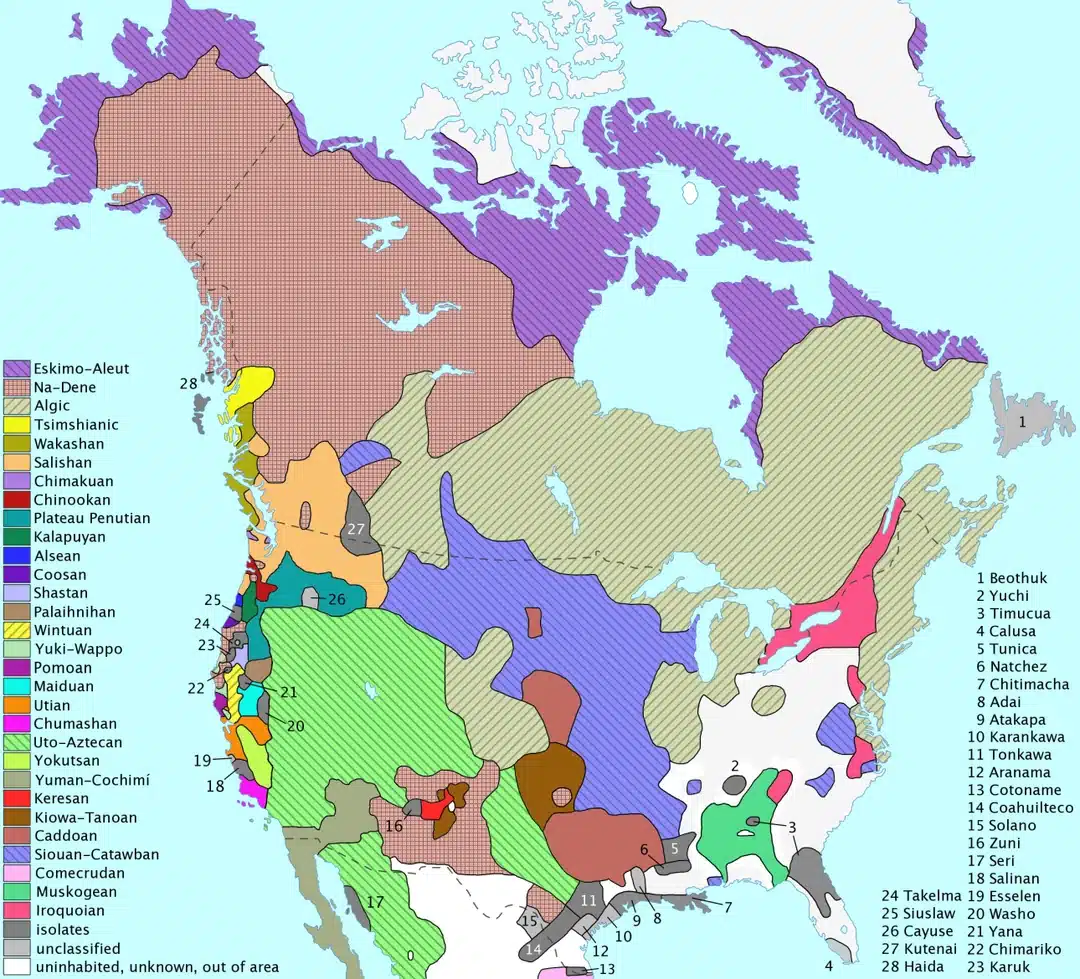
Unfortunately, the number of speakers of the native languages of North America continues to decline. As a result, these languages are likely to become extinct in the near future.
Language of Business in California
California’s vibrant and culturally rich environment shapes a dynamic business landscape influenced by various languages, reflecting its global connections and diverse population. While English remains the dominant language for corporate communication, negotiation, and documentation, other languages play a crucial role in driving business success across the state.
Spanish is particularly significant due to California’s geographic proximity to Latin America and its large Hispanic community, making it essential in industries like trade, real estate, healthcare, and public services.
Asian languages, including Mandarin, Cantonese, Korean, and Vietnamese, are increasingly influential, driven by California’s robust trade relationships with Asian markets and its sizable Asian-American population. These languages are pivotal in technology, international commerce, and local business interactions.
Tagalog, spoken widely by California’s thriving Filipino community, holds a key role in healthcare, hospitality, and social services, further enriching the state’s multilingual workforce.
Additionally, languages like Arabic, Japanese, and Farsi are gaining importance in international trade, tech innovation, and cultural exchange, reflecting the state’s appeal to investors and professionals from the Middle East, Japan, and other global regions.
California’s multilingual workforce not only strengthens its position as a leader in international trade and innovation but also fosters cultural understanding and diverse networking opportunities. This linguistic diversity makes California a global business hub, bridging markets and cultures from around the world.
The Growing Importance of Multilingualism in California
California has a significantly higher rate of multilingualism than most other states in the U.S. The diversity of its population, shaped by immigration and global connections, has resulted in more than 200 languages spoken across the state, making it a linguistic powerhouse. You can hear a variety of languages spoken in California apart from English, including Spanish, Mandarin, Cantonese, Tagalog, Vietnamese, Korean, Persian, and Armenian. This rich language mix reflects California’s multicultural identity.
Several educational institutions in California offer students the opportunity to learn a second language as part of the curriculum, often offering options such as Spanish, French, Mandarin, and Japanese. Schools increasingly emphasize bilingual education to prepare students for a world where multilingual communication is an advantage.
The increasing linguistic diversity in California has sparked interest and conversations among public service providers, educators, policymakers, and the broader community.
California’s multiculturalism is reflected not only in its language, but also in its vibrant communities, diverse cuisine, and thriving arts scene. The state is a melting pot where people from diverse backgrounds come together to share experiences and celebrate their differences. As California continues to become a global economic and cultural hub, embracing multilingualism will enhance its reputation as an inclusive and welcoming place for all.
How clients can benefit from translation agencies in California
California’s linguistic diversity, with languages such as Spanish, Chinese, Tagalog, Vietnamese, and many others spoken widely, has created a strong demand for multilingual content across industries. This has led to the rapid growth of translation and localization companies throughout the state, serving both local communities and global markets.
These companies play a vital role in helping businesses adapt their content to California’s multicultural audience while also supporting their expansion into international markets. With expertise in a wide range of languages and cultural nuances, these organizations facilitate seamless cross-cultural communication, enabling businesses to thrive in one of the most linguistically rich and globally connected regions in the world.
To Conclude
Most immigrants in California, born either in Latin America (50%) or in Asia (39%). Immigrants have become an intrinsic part of the Californian population.
What’s more, studies show that people have a positive attitude towards them – 78% of Californian people believe that immigrants benefit the American economy.
Besides the economic benefit, we should acknowledge that we live in a linguistically diverse world.
While English got established as the most spoken language in California and in the US, we should not forget that a huge part of this American state is constituted of immigrants.
Recognizing the various languages spoken in California by thousands, if not millions, of people is a step every business should make in order to expand and conquer new markets.
Also read: Top Languages Spoken in Florida
Looking for translation services in California
FAQS
What is the most spoken language in California?
English is the most widely spoken language in California, used by the majority of residents in daily communication.
Besides English, what is the most common language spoken in California?
Spanish is the most common non-English language, spoken by approximately 28-30% of California’s population, reflecting the state’s strong Hispanic and Latinx communities.
Which languages follow Spanish in terms of the number of speakers in California?
After Spanish, the most spoken languages are Chinese (including Mandarin and Cantonese), Tagalog, Vietnamese, and Korean.
How diverse is California linguistically?
Over 200 languages are spoken in California, making it one of the most linguistically diverse states in the US. Around 44% of residents speak a language other than English at home.
Why is Tagalog significant in California’s language profile?
Tagalog is the third most spoken language in California, largely due to the sizable Filipino community, especially in areas like Daly City where about one-third of residents identify as Filipino.
How does California’s linguistic diversity impact education and public services?
The diversity necessitates bilingual education programs and multilingual public services to accommodate many residents, with schools often offering instruction in languages like Spanish, Mandarin, and Tagalog to support diverse communities.