
The language industry is a crucial component of our global economy and plays a vital role in facilitating effective cross-cultural communication. Linguists are the backbone of the localization industry, breaking down language barriers and helping businesses and individuals communicate across cultures.
In the translation industry, freelancing is a popular career choice for professionals with expert language skills. In a 2020 survey involving 7000 translators and interpreters, 75% reported that they were freelancers.
To gain a better understanding of freelancers in the language industry, we conducted a survey. Our goal was to gather insights into the firsthand experiences and difficulties freelancers encounter in the language industry, as well as their opinions on the influence of technology within their field.
Methodology and Scope Of the Survey
The survey was conducted online between March and May 2023 and was open to all freelance language professionals.
To ensure maximum participation, the survey link was made accessible to the respondents via multiple channels. We reached out to potential participants of the survey via email campaigns, email outreach, social media announcements, our website, and newsletters to collect responses.
The survey consisted of mandatory multiple-choice questions and a few optional open-ended questions. We asked participants about their background, work habits, knowledge and skills, income and clients, and viewpoints towards the impact of AI — including the use of emerging AI tools — on their field. This report presents key findings from the survey.
While we acknowledge that this survey has some limitations such as selection bias, representativeness of the sample, limited scope and time constraints, we believe it provides a valuable representation of the experiences and attitudes of freelance language professionals in the industry.
The demographic composition and profile of the respondents
The survey received a total of 877 responses from freelance language professionals around the world. Among the respondents, the highest number of participants were from South Asia, accounting for 24.97% of responses.

The survey respondents were of 3 categories: Full-time freelancers, part-time freelancers and currently part-time freelancers who want to transition to full-time freelancing.
The survey highlighted that 43% of the respondents have a bachelor’s degree, while 42% hold a master’s degree. The rest had varied educational backgrounds ranging from high school diplomas to doctorate degrees, indicating the majority of respondents have a solid educational background.

Most linguists are multiskilled and provide services in addition to translation. Regardless of the nature of work in the industry, a linguist must have impeccable language skills, a deep understanding of culture and subject matter expertise in their respective fields.
While a substantial number of respondents (98%) worked as freelance translators, many took up the roles of subtitlers, transcriptionists and interpreters in addition to translation.
Speaking of the work experience of the freelancers, 37.51% of the respondents had more than 10 years of experience freelancing in the industry.

96.12% of the respondents reported translating content across multiple domains showcasing their versatility. Let us delve into a breakdown of these domains.
The results reveal that an impressive 74.57% of the respondents translated marketing content, whereas the sports domain saw comparatively fewer translators, with only 31.36% working on sports-related content.

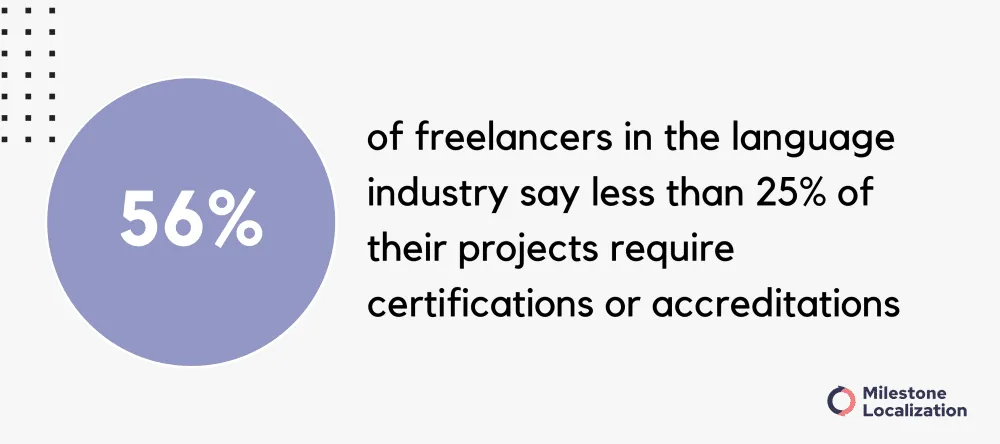
When asked what percentage of their projects require special certifications and accreditation, 56% of the respondents said less than 25% of their projects require certifications and accreditations.
The overall analysis of the respondents’ educational backgrounds and work profiles indicates that language industry freelancers are multifaceted and work in different capacities across various domains.
While certifications and accreditations can be valuable assets in certain projects, a significant portion of the work performed by freelance language professionals does not necessitate these specific credentials.
Also read: Why should companies localize corporate training?
Income satisfaction of freelancers in the language industry: How much do translators make?
With the increase in demand for translation and localization services by businesses across the globe, the language industry offers various opportunities for freelancers across different roles.
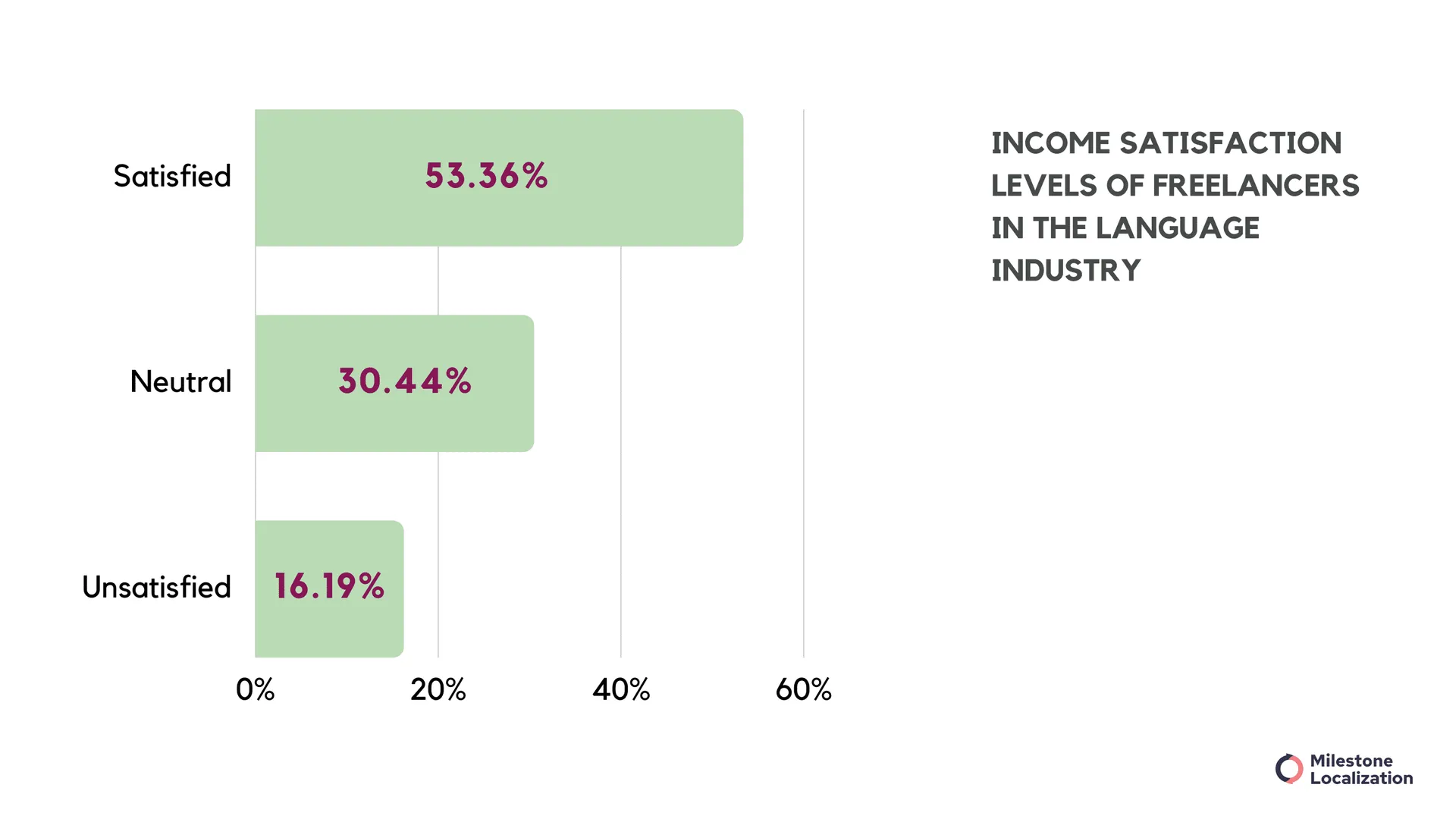
Are freelancing language professionals satisfied with their income?
53.36% of the respondents say they are satisfied with their freelancing income in their language industry.
Potential for earning sustainable income as a freelancer
Freelancers receive projects from new clients as well as returning clients who have partnered with them for long-term collaboration.
Long-term partnerships or contracts with returning clients guarantee recurring income to the freelancers, signifying the importance of maintaining a strong relationship with clients.
Will Ward, the founder and CEO of Industry Arabic says:
“The best way to keep any freelance career sustainable is to latch onto clients that are willing to make you a regular part of their workflow. Often, you’ll have to perform exceptionally during a sort of trial period in order to gain the trust of your client. I’d always gravitate toward these kinds of job openings during my search and prioritize them over one-off gigs.”
The survey data revealed that 40.36% of respondents earn more than 75% of their income from returning clients. Furthermore, the data showed a strong correlation between years of experience and income from recurring clients.
Respondents with less than 1 year of experience reported earning 14.29% of their income from returning clients. In contrast, those with more than 10 years of experience earned a substantial 47.72% of their income from returning clients.
This highlights the increasing potential for stable income as freelancers establish themselves in the industry and develop a reliable client base.


What do language industry freelancers think about AI in translation?
Artificial intelligence is developing at a rapid rate. Although machine translation has been there for a while, new trends are emerging concerning the use of artificial intelligence in the language industry, such as Neural Machine Translation, speech-text recognition, CAT tools, and Chat GPT etc.,
How are the advancements in these technologies impacting freelancers in the language industry?
Impact of AI Translation on freelance professionals
Advancement in AI has been a boon and a bane. It has been significantly beneficial in streamlining various workflows and processes across industries.
It has also made its way into the translation industry, with 59.86% of the respondents having incorporated AI, machine translation and automation tools in their work.
When asked about the impact, a massive 73.71% reported that incorporating AI, machine translation and automation tools have improved their productivity and accuracy.
Machine translation and automation tools have been specifically helpful in translating large volumes of content in a shorter time, reducing the overall turnaround for translations. However, a thorough review of the machine-translated text and post-editing is required to maintain the quality and accuracy of translations.

When asked about the incorporation of AI in workflow, Kay Velik, Content Director at Nine Peaks Media said:
“Yes, I have used AI in my work, usually in writing. These technologies can streamline tasks such as translation, transcription, and terminology management, potentially improving productivity and accuracy. However, it’s important to carefully assess the quality and reliability of these tools, as they may not always produce accurate translations or fully capture the nuances of language. It’s also crucial to maintain confidentiality and comply with data protection regulations when using these technologies in your work.”
Can AI replace human translators?
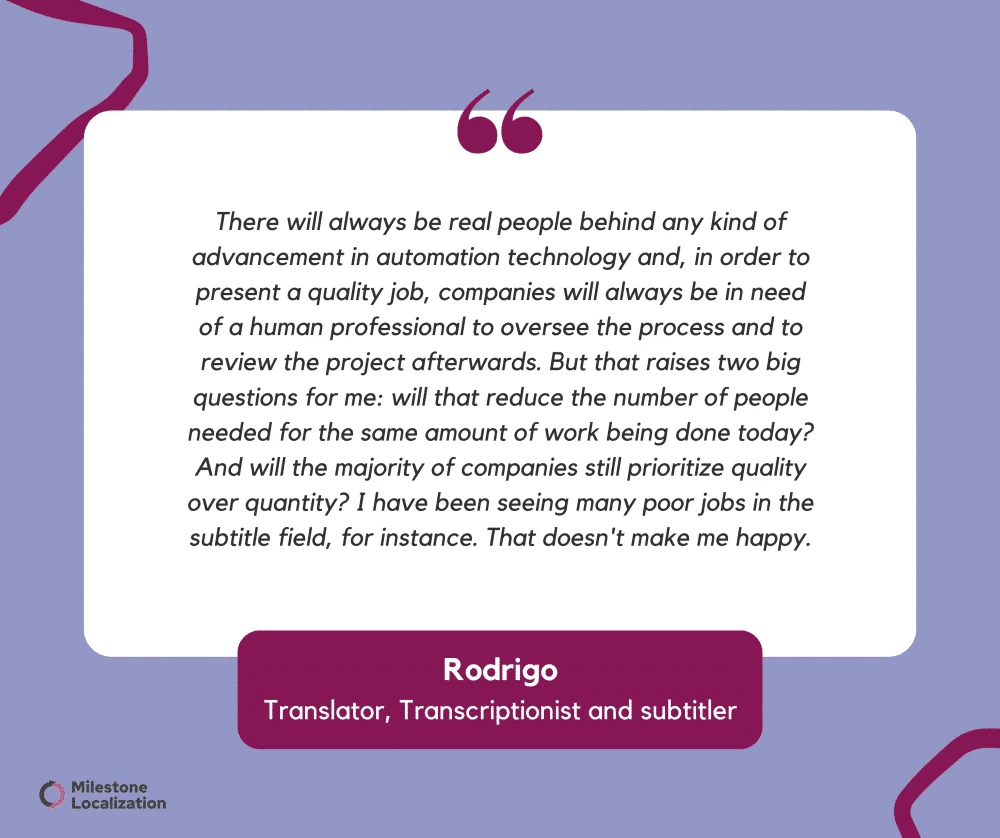
With the continuous advancement in technology, AI has gained the capability of producing highly accurate translations, threatening the livelihood of human translators.
Fascinating technologies such as real-time translation, speech recognition and many other tools have been in continuous development. Companies may soon be able to use these tools and technologies to fulfil their language requirements faster and at a much lower price.
So, what is the opinion of language industry freelancers on this?
Rones Carijo, a translator and subtitler, says:
“While AI has already had a significant impact on many industries and professions, it is unlikely that it will completely replace human professionals in the near future. While AI can perform certain tasks with speed and accuracy that surpasses human abilities, there are still many tasks that require human creativity, empathy, and critical thinking.
In the field of language translation, for example, AI has made significant progress in recent years but still faces challenges in accurately translating nuances, idioms, and cultural contexts. Human translators are still needed to ensure accurate and culturally appropriate translations.
In summary, while AI has already had a significant impact on many professions, it is unlikely to completely replace human professionals in the near future, as many tasks still require human creativity, empathy, and critical thinking, as well as interpersonal skills that AI cannot replicate.”
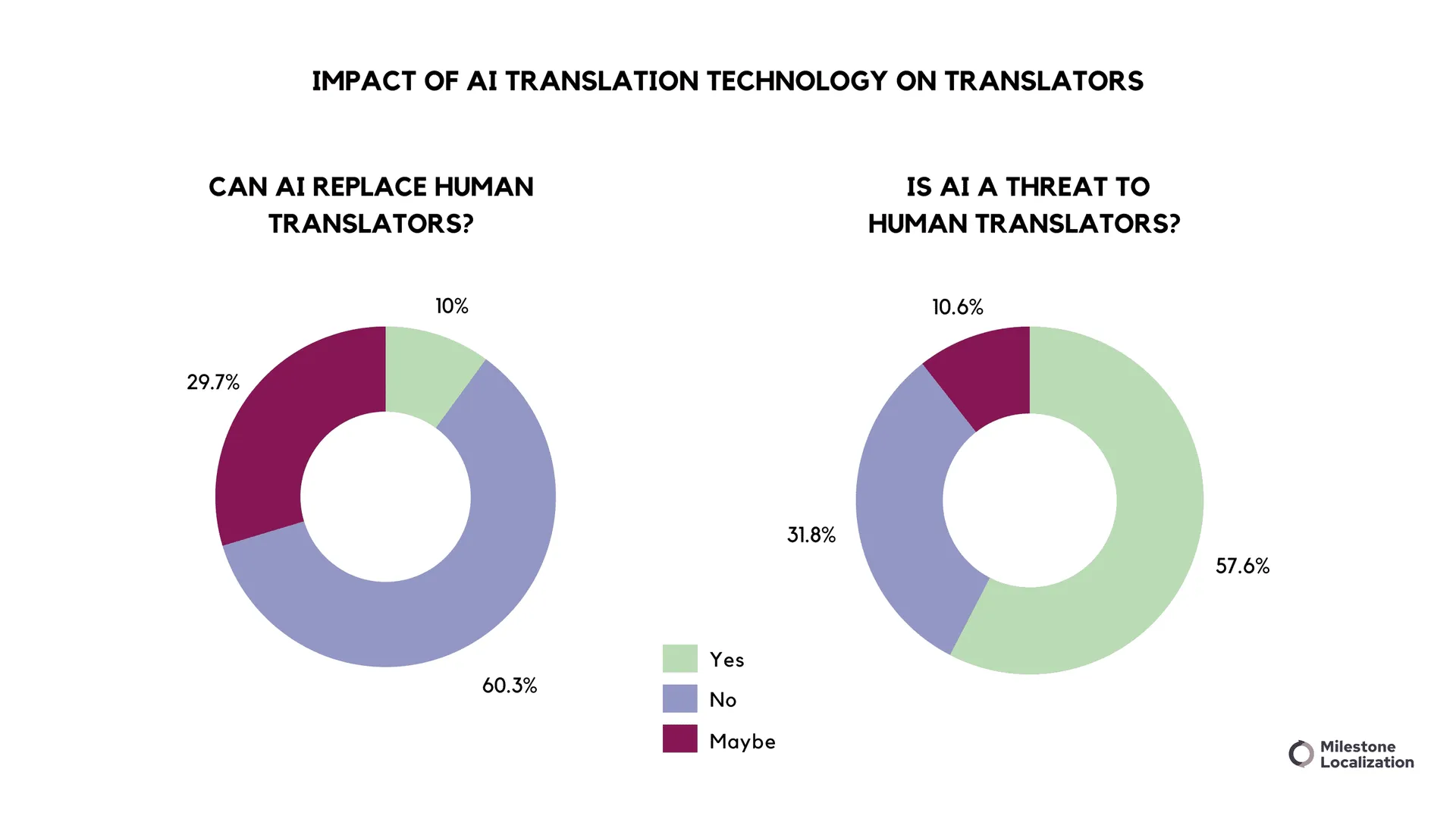
57.6% of the respondents view AI translation tools as a threat to their profession. However, 60.3% of them believe that AI will not be able to replace human translators.
A translator, transcriptionist and subtitler, said:
“Until now, humans still have a far great dictionary than AI, a far greater repertoire and far greater flexibility. I’m not sure if AI is ever going to take over that. A shift, yes for sure there will be one but a complete take over… I don’t think so. A human is always needed to check the work, ultimately.”
Ethical and moral considerations in incorporating AI and machine translation tools
AI translation technology is still in development and gives rise to various ethical and moral considerations while incorporating it.
Relying solely on this means compromising the translation quality and losing cultural sensitivity.
Additionally, data privacy and security are always a concern. Most businesses have confidential data that requires translation. Hence using AI or machine translation tools can cause ethical and moral dilemmas.

However, our survey revealed that the integration of AI does not pose significant ethical concerns for a majority of language professionals.
83% of respondents say they have not faced any ethical dilemmas related to using AI in their work, while the rest of them did face ethical dilemmas.

Muhammad Asif, a translator, transcriptionist, interpreter and subtitler, says:
“Ethical concerns related to the use of AI in language-related tasks include bias, potential job loss, and privacy and security issues. It is important to address these concerns and develop and use AI in a responsible and ethical manner.”

Challenges Faced By Freelancers In The Language Industry
Freelancing in any industry comes with its benefits and challenges.
Some of the most common challenges freelancers face include long working hours, weekend commitments, balancing multiple projects and deadlines, negotiating rates & timelines, networking and maintaining a good relationship with clients.

Uma, a translator, says
”Freelancing is not an easy task but if you have chosen it then you have to work hard and keep updating yourself everywhere, every day.”
Amidst this, maintaining a work-life balance can be challenging. However, according to our survey, maintaining a healthy work-life balance is a top priority for many freelancers. 69.33% of the respondents say maintaining a work-life balance is very important.

Thierry Martial, a translator, transcriptionist and subtitler, says:
“Freelancing is very demanding. You need to get ready to commit yourself totally to each assignment. Be prepared to spend sleepless nights. Be ready to learn about your speciality and about the technological advancements in your speciality.”
It is worth noting that 35.69% of the respondents work more than 40 hours a week, and 37.20% regularly work on weekends.

Christian, a freelance translator and transcriptionist, says:
“To balance multiple projects and deadlines as a freelancer, I start by creating a schedule and setting specific deadlines for each project. Prioritize my work based on importance and proximity to deadlines, and break down large projects into smaller, more manageable tasks. Communication with clients is also key, as it helps me to manage expectations and prevent misunderstandings. I take breaks throughout the day to prevent burnout and maintain productivity. Finally, I learn to say no if I feel overwhelmed or don’t have time to take on a new project.”
Do freelancers in the language industry recommend freelancing? Here is what professionals in the industry say
When it comes to recommending freelancing as a career choice, the responses vary among professionals in the industry.
While some highly recommend freelancing due to its flexibility, independence, and potential for financial growth, others acknowledge the challenges and suggest carefully considering one’s circumstances and preferences before venturing into freelancing.
Graeme, a translator and transcriptionist, says:
It takes time and effort to grow your client base and prove your worth. Like any other business, it takes time. Don’t expect to earn a good income overnight. Be prepared to stick it out until you make a success. Only then can you reap the rewards.”
Our survey reveals that 69.21% of respondents are more likely to recommend freelancing to others. Of these, 73% are part-time freelancers, and 67.50% are full-time freelancing professionals.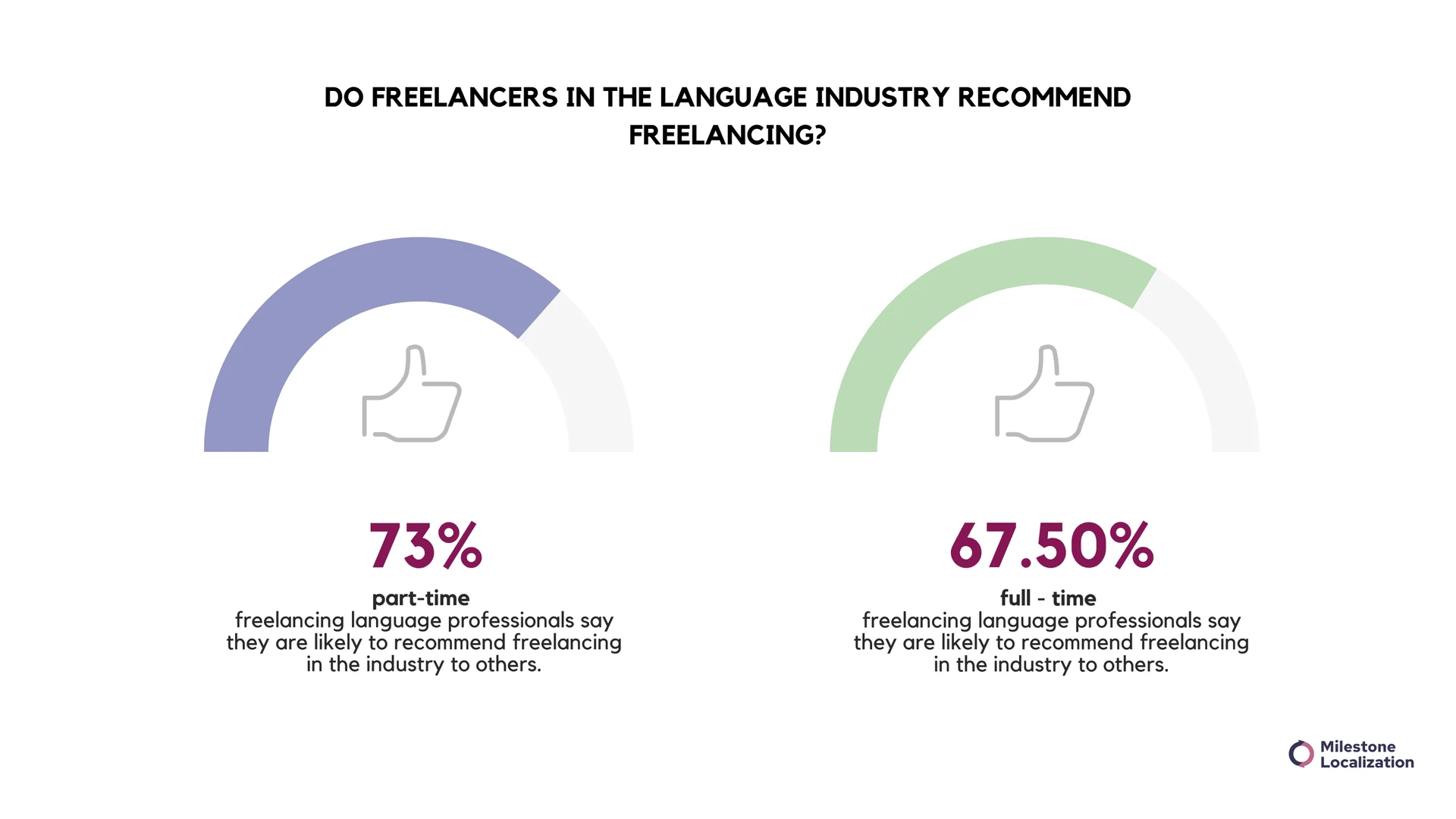
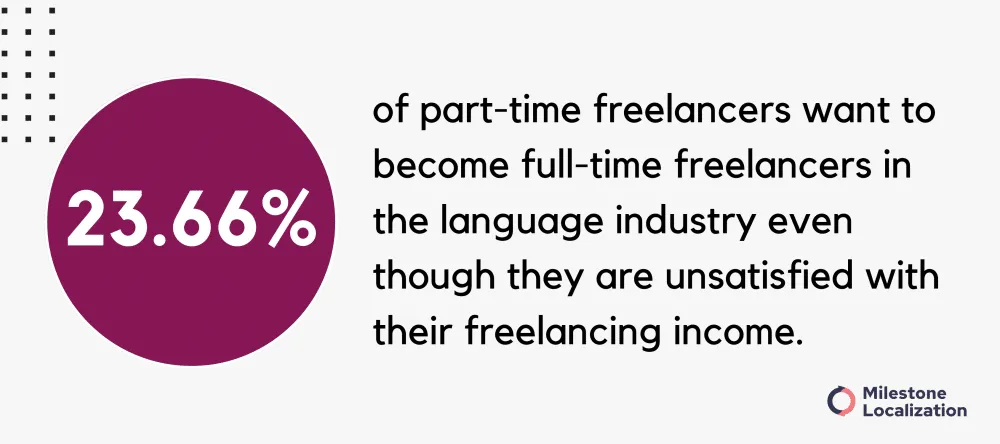
Interestingly, 23.66% of part-time freelancers want to become full-time freelancers in the language industry even though they are unsatisfied with their freelancing income.
Before making any career decision, it is crucial to evaluate the benefits and drawbacks, assess one’s skills and ability to self-motivate and plan for a solid client base and financial stability.
Ultimately, the decision to pursue freelancing as a translator depends on individual factors and goals.
Pawel Byrski, a translator says:
“Find a company that has great reviews
Get certified to get more work (ATA )
Expect the unexpected
Finish projects 1-2 days before deadline
Learn to use CAT tools
Practice to translate by yourself and time yourself to see how fast you can do it
Create your own dictionary of words unfamiliar to you – Write the words in Word, then convert to pdf.”
Fred Hoffman, the founder of True Wilderness, says
“For those interested in becoming freelance in the language industry, my advice is to research and understand the industry you plan to work in, make sure you have a strong portfolio of language-related projects, develop your network by taking part in online and offline initiatives related to the industry, and stay informed about current trends.”
Starting A Career In Translation: Things You Should Know About
Professional Development
Embarking a career in the translation industry demands more than just bilingualism and requires a deep understanding of languages, culture and subject matter expertise.
Continuous upskilling and staying informed of new trends and technologies are essential for professional growth and securing new opportunities.
On average, 39% of professionals spend 5 – 10 hours weekly on professional development. Furthermore, some projects may also require freelancers to work on specific tools, adding a layer of proficiency.

Securing clients and projects
While possessing exceptional skills and knowledge is important, finding clients and securing projects are equally vital. 61% of the respondents reported that they work with less than 5 clients a month. You should have a portfolio or resume to pitch potential clients regularly and expand your clientele.
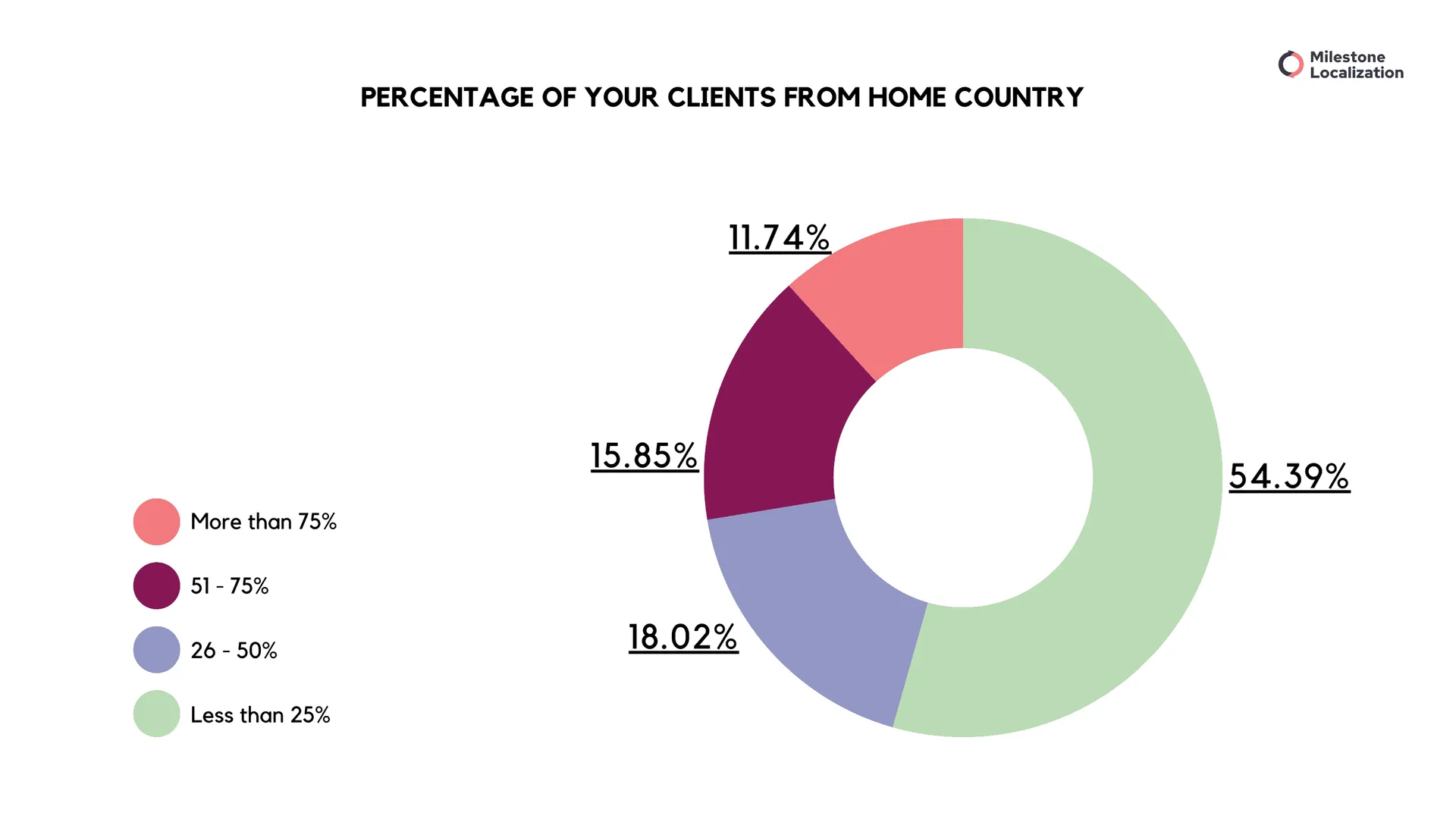
Since the demand for translation and localization services is global, freelancers work with clients from their home country as well as international clients. 54.39% say that less than 25% of their clients are from their home country.
In situations like these, spending time on marketing activities and reaching out to potential clients is of prime importance. A professional business card, easily created with a business card maker, can be a helpful tool for making connections and leaving a lasting impression.

Sadi, a translator, transcriptionist and subtitler, says:
“Landing your first job will take time. So, you have to be patient, try consistently, and see what others doing. Apart from language skills, you have to have some sort of marketing skills to present your skills and yourself. You have to learn the way to show how your skills will help your clients be benefited”
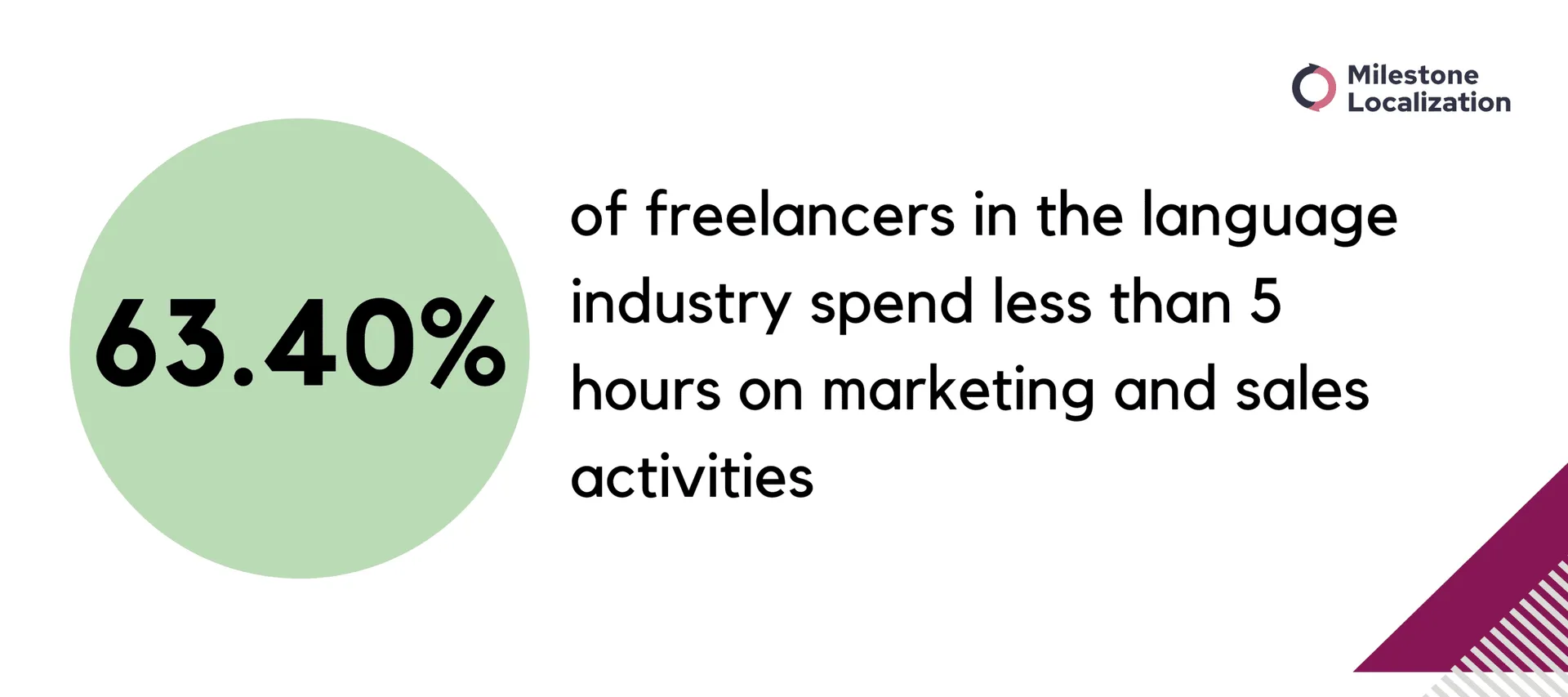
Of the respondents, 63.40% dedicate less than 5 hours a week to marketing and sales activities.
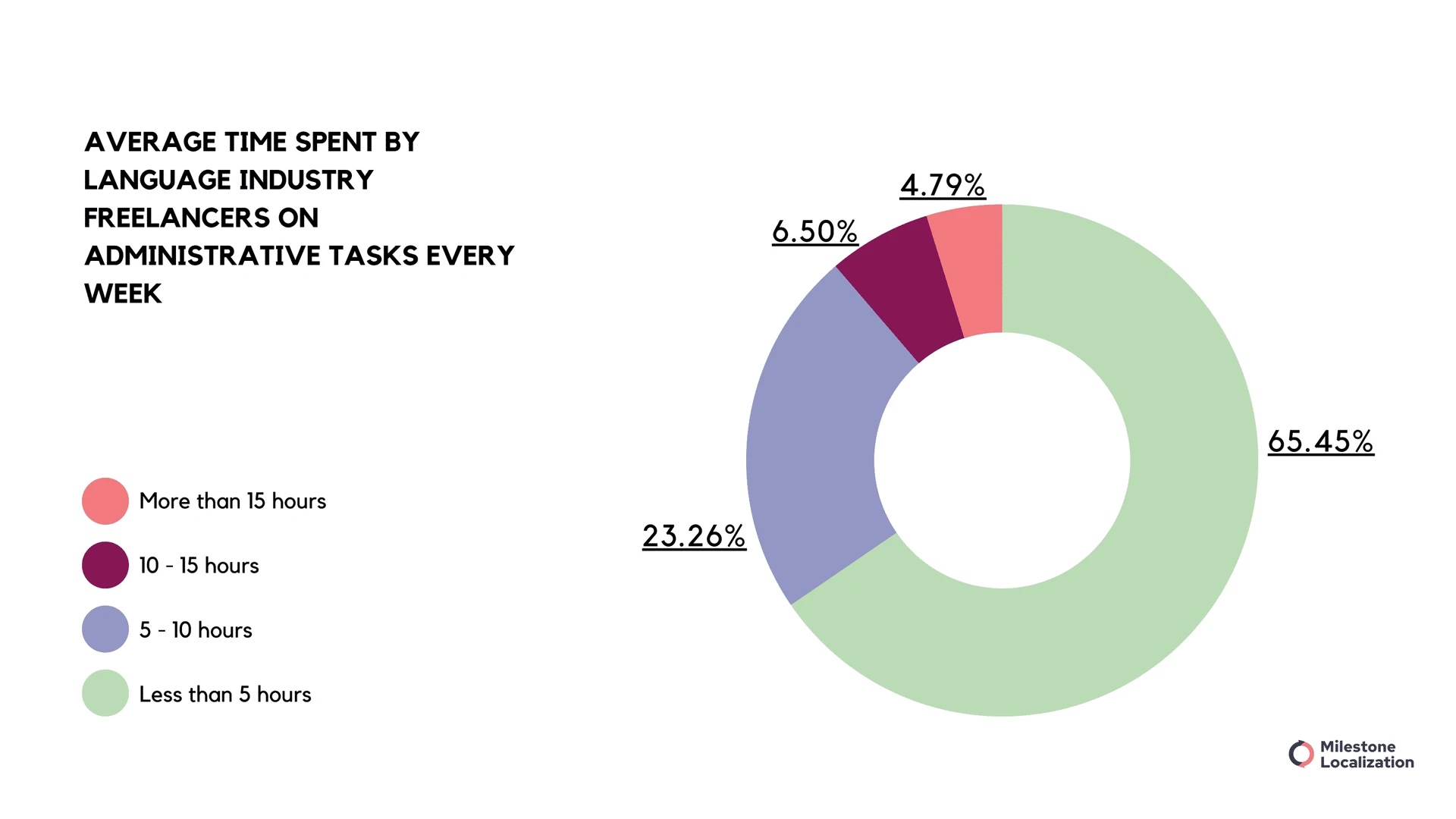
Additionally, administrative work such as creating freelance invoicing, accounting, taxation and other paperwork is also an essential part of the journey.
However, the time taken by individuals for administrative tasks varies from person to person. 65.45% of respondents spend less than 5 hours per week, while a small 4.79% invest more than 15 hours a week in administrative activities.
Managing remote work
At times, it can be challenging to stay motivated while working independently.
Here are tips from language professionals on how to stay motivated while working:
Abdul Saboor Khan, the head of marketing at Your PCB, says:
“Set both immediate and long-term objectives for your freelance career. Review and revise these objectives frequently to keep motivated and focused. These techniques can help you operate independently in the translation and localization sector while managing your freelancing workload, meeting deadlines, and keeping your motivation high.”

Christian, a translator and a transcriptionist, says:
“To stay motivated, I set clear goals, establish a routine, stay organized, and take breaks throughout the day. I am staying connected to others in my industry or field, finding inspiration, and celebrating successes also helps me to boost my motivation. I prioritize tasks to maintain productivity, eliminate distractions, and take care of my physical and mental health. “
Laura Gabriel, a translator, says:
“I’m not always motivated and productive. When I don’t have much work to do, I focus on learning, networking, and marketing. But what really helps me not to give up is the fact that I love what I do. And honestly, if you don’t love translating, freelancing will be very hard to get through it.”

Summary of Findings
The survey revealed several significant findings about the language industry and freelancing. Here is a summary of the key points:
- 56.10% stated that less than 25% of their projects required specialized industry knowledge.
- 53.36% of freelancers are satisfied with their freelancing income in their language industry.
- 40.36% of translators earned more than 75% of their income from returning clients.
- 23.66% of part-time freelancers expressed a desire to become full-time freelancers despite being unsatisfied with their freelancing income.
- 73.71% of freelancers who incorporated AI, automation, or machine translation tools reported improved productivity and efficiency.
- 57.6% of the respondents view AI translation tools as a threat to their profession.
- Overall, 60.32% of respondents believe AI will not replace human translators.
- 83% of respondents say they have not faced any ethical dilemmas related to the use of AI in their work
- 69.33% of freelancers emphasized the importance of maintaining a work-life balance.
- 35.69% of the respondents work more than 40 hours a week, and 37.20% regularly work on weekends.
- 69.21% of freelancers in the language industry are likely to recommend freelancing to others.
- On average, 39% of freelance linguists spend 5 – 10 hours weekly on professional development.
- 61.57% of freelance linguists worked with less than five clients per month.
- 63.40% of language industry freelancers dedicate less than 5 hours weekly to marketing and sales activities.
- 65.45% of freelance linguists spend less than 5 hours per week in administrative activities
Conclusion
The survey aimed to gather insights into the experiences and challenges of freelancers in the language industry and their opinions on the development and impact of AI in translation. The findings revealed valuable information and shed light on the state of freelancing in the industry.
The comments and recommendations from experienced linguists expressing their viewpoints on various themes advances our knowledge of freelancing in the translation sector. They provide meaningful information for current linguists and other industry players, as well as a comprehensive outlook for individuals planning to begin a career in the language industry.