
New York City, located in the northeastern United States, is a dynamic and diverse metropolis and the largest city in the country. With a population of nearly 19 million, it stands among the most culturally rich urban centers in the world.

Located along the Hudson River and the Atlantic coastline, New York City serves as a prominent global center for finance, culture, and international diplomacy The city’s diverse neighborhoods collectively represent a complex mosaic, with over 800 languages spoken, highlighting its position as one of the most linguistically and culturally varied urban areas worldwide.
Have you thought about the languages spoken in New York? Keep reading to learn about the top languages spoken in the city.
Top languages spoken in New York
1: English
It is spoken by about 65% of residents at home, making it the primary language of communication in New York City. It serves as the common language in business, education, government, and daily life, making it essential for integration and opportunity in this global metropolis.
2: Spanish
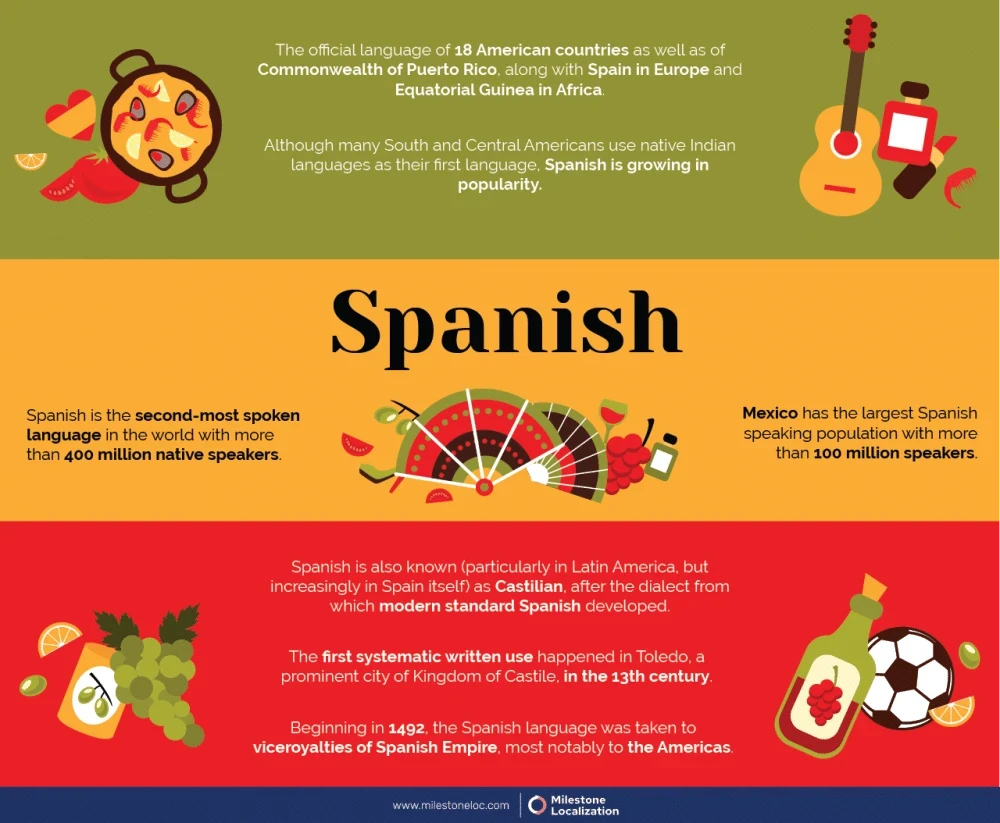
Spoken by roughly 25% of the population, Spanish is widely used due to large Latino communities from Puerto Rico, the Dominican Republic, Mexico, and other Latin American countries. This language shapes many neighborhoods and cultural events across the city.
3: Chinese (Mandarin, Cantonese, Fuzhouese)
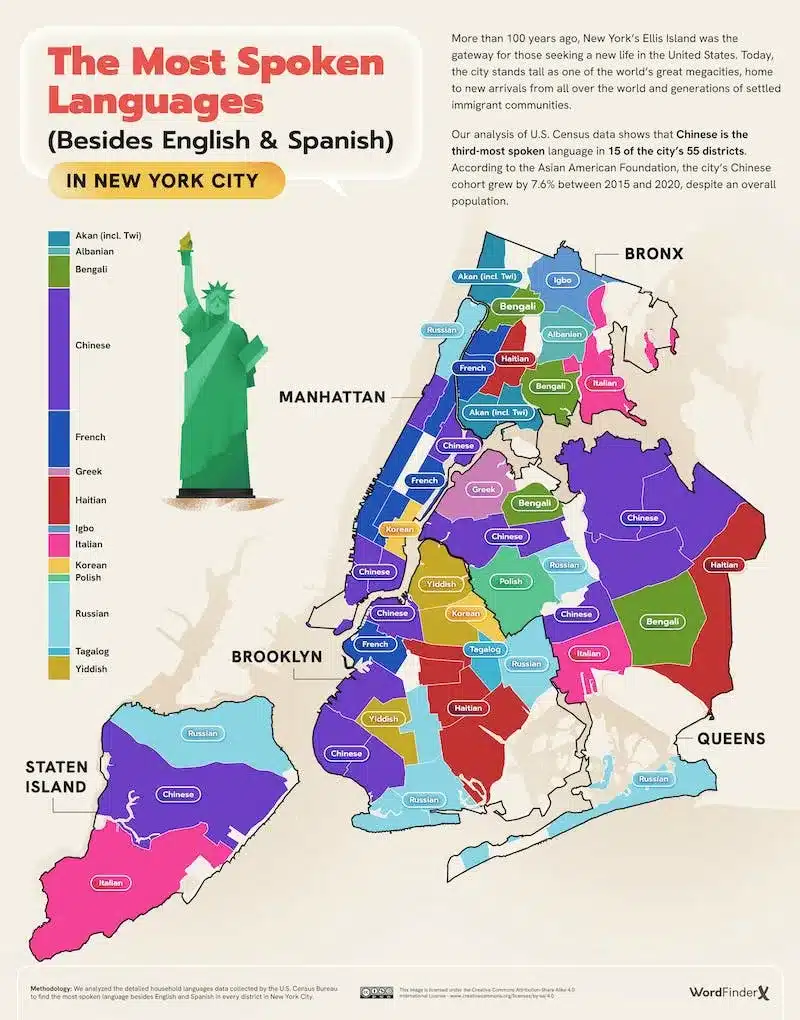
Spoken by around 230,000 residents, Chinese is common in neighborhoods like Chinatown and Flushing, reflecting strong immigrant roots. The language is used in community centers, schools, and local businesses.
4: Russian
About 95,000 residents speak Russian, especially in Brighton Beach, Brooklyn, known as “Little Odessa,” home to a strong Eastern European community.
The language is used in local media, commerce and community organizations.
5: Haitian Creole
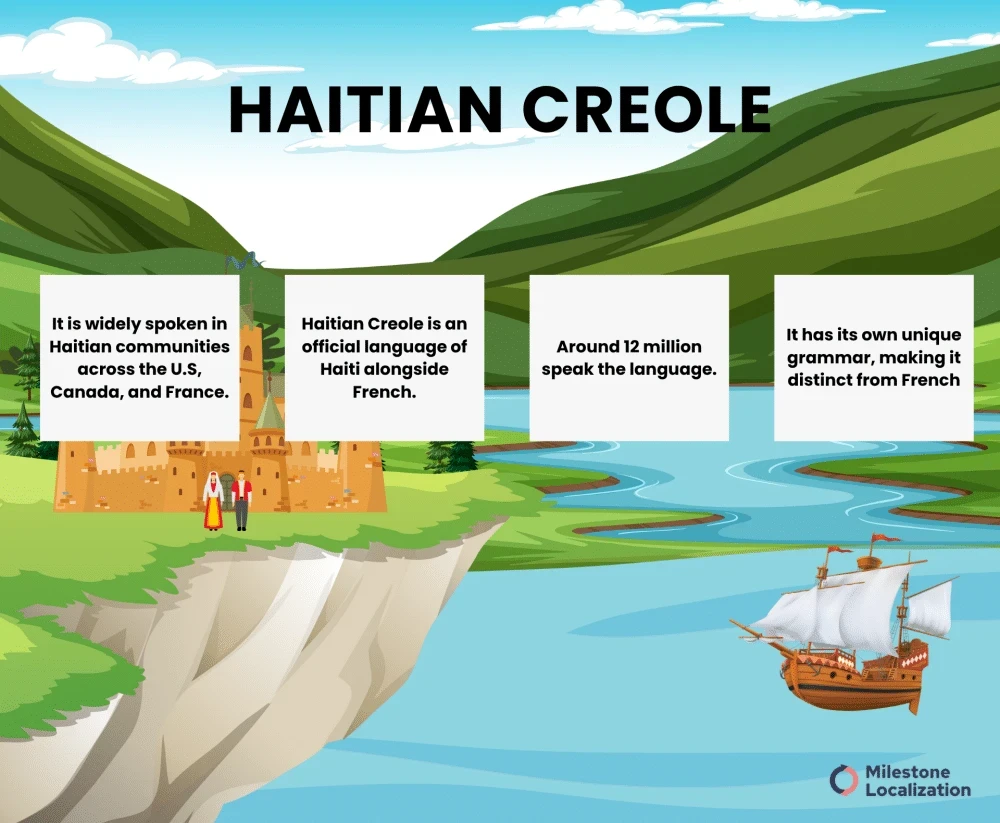
Approximately 80,000 people speak this language, mainly in areas like Flatbush It plays a key role in preserving Haitian identity and is widely used in homes, churches, and local institutions.
6: Italian
Historically significant due to large waves of Italian immigration in the late 19th and early 20th centuries, Italian is still spoken by about 70,000 residents. Though less common among younger generations, it still holds cultural value in specific neighborhoods and family traditions.
7: Yiddish
Around 38,000 people speak Yiddish, especially in Hasidic and Orthodox Jewish communities in Williamsburg and Borough Park. It is used in religious study, daily conversation, and traditional schooling.
8: Arabic
Spoken by about 60,000 residents, Arabic is found in growing Middle Eastern and North African communities throughout the city. It contributes to New York’s multiculturalism through businesses, mosques, and media.

9: Korean
Approximately 62,000 New Yorkers speak Korean, mostly in Manhattan and Queens, supporting strong cultural and business networks. The language is also taught in local schools and supported by Korean community centers.
10: French
Spoken by around 58,000 people, French is used by both expatriates and immigrants from Francophone African countries. It is present in schools, cultural events, and international institutions across the city.
Also read: The Top Languages Spoken in California
What is the official language of New York?
New York City does not have an official language, but English is the dominant language spoken by the majority of residents. Approximately 65% of New Yorkers speak English at home, making it the most common language in the city and the United States overall.
There have been legislative efforts to designate English as the official state language, such as Senate Bill S1902, introduced in 2013, which aimed to make English the official language of New York State
Although these efforts show the importance of English in public life, the state has not made it the official language
How many languages are spoken in NYC
New York City is one of the most linguistically diverse cities worldwide, with over 800 languages spoken across its five boroughs. This diversity reflects the city’s rich history of immigration and cultural exchange.
- Approximately 65% of residents speak English at home.
- Around 25% speak Spanish.
- Chinese, including both Mandarin and Cantonese, is the third most common language.
- Other common spoken languages include Russian, Haitian Creole, Yiddish, Arabic, Korean, and French.
This linguistic diversity not only defines New York’s unique character but also strengthens its position as a dynamic and inclusive global city.
Also read: Top Languages Spoken in Florida
Reliable Language Translation Services
Languages spoken in northern New York
Northern New York is a rural region known for its natural beauty and small towns. English is one of the primary languages spoken in this region, and it is used in schools, businesses, and daily life.
Due to its proximity to Canada, French is also commonly spoken, especially near the Quebec border.
In addition to these languages, Indigenous languages, such as Mohawk and other Iroquoian tongues, are spoken within Native American communities. Smaller immigrant populations have also introduced languages like Spanish, contributing to the region’s linguistic diversity
While not as linguistically diverse as urban areas, the mix of English, French, Indigenous, and immigrant languages reflects a place where tradition and change coexist.
Bilingual education in New York

New York adopted bilingual education to address the needs of students with limited English proficiency and to support their academic success while preserving their native languages.
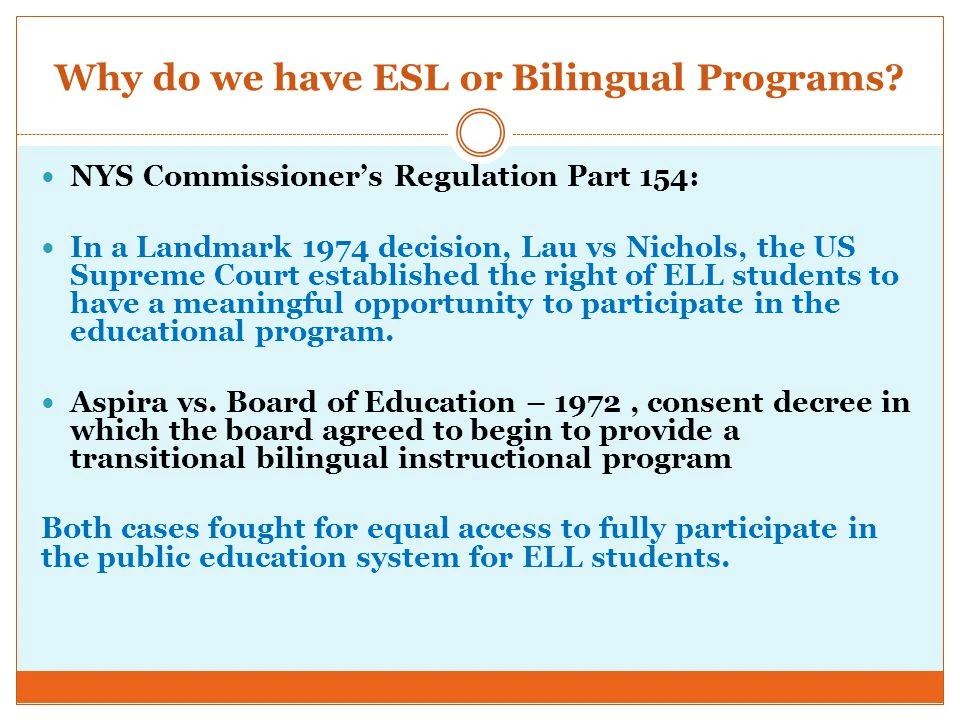
This approach began formally in 1969 with the establishment of the New York State Education Department’s Office of Bilingual Education, which provided support to school districts offering programs for limited English proficient students.
A major milestone came in 1974 with the Aspira Consent Decree, a legal settlement that guaranteed the right to transitional bilingual education and English as a Second Language (ESL) programs for New York City students, significantly expanding bilingual education across the city and influencing practices statewide.
Key bilingual education programs in New York include:
1: Dual language programs
- Provide instruction in English and another language such as Spanish, Mandarin, or Arabic.
- Aim to develop bilingualism, biliteracy, and cultural understanding by teaching students in both languages.
2: Transitional bilingual education (TBE)
- Supports students in gradually transitioning to English proficiency while maintaining their native language.
- Instruction shifts progressively from the native language to English over time.
3: English as a new language (ENL)
- Offers focused English language support within mainstream classrooms.
- Helps students build English skills while accessing grade-level content.
These programs reflect New York’s ongoing commitment to linguistic diversity and educational equity, serving hundreds of thousands of multilingual learners statewide.
The bilingual education system has evolved over decades, adapting to changing demographics and educational research to better serve students’ language and academic needs.
Many students now seek the custom dissertation services to help them articulate their understanding of bilingual education policies and their impact on learning outcomes.
Such platforms can provide guidance on structuring arguments and improving academic writing in both languages.
Also read: Languages Spoken In Texas & Its Bilingual Education System
History of New York
The history of New York is defined by a series of important political, cultural, and economic changes that have shaped its role as a leading state in the country.

Pre-17th century: indigenous era
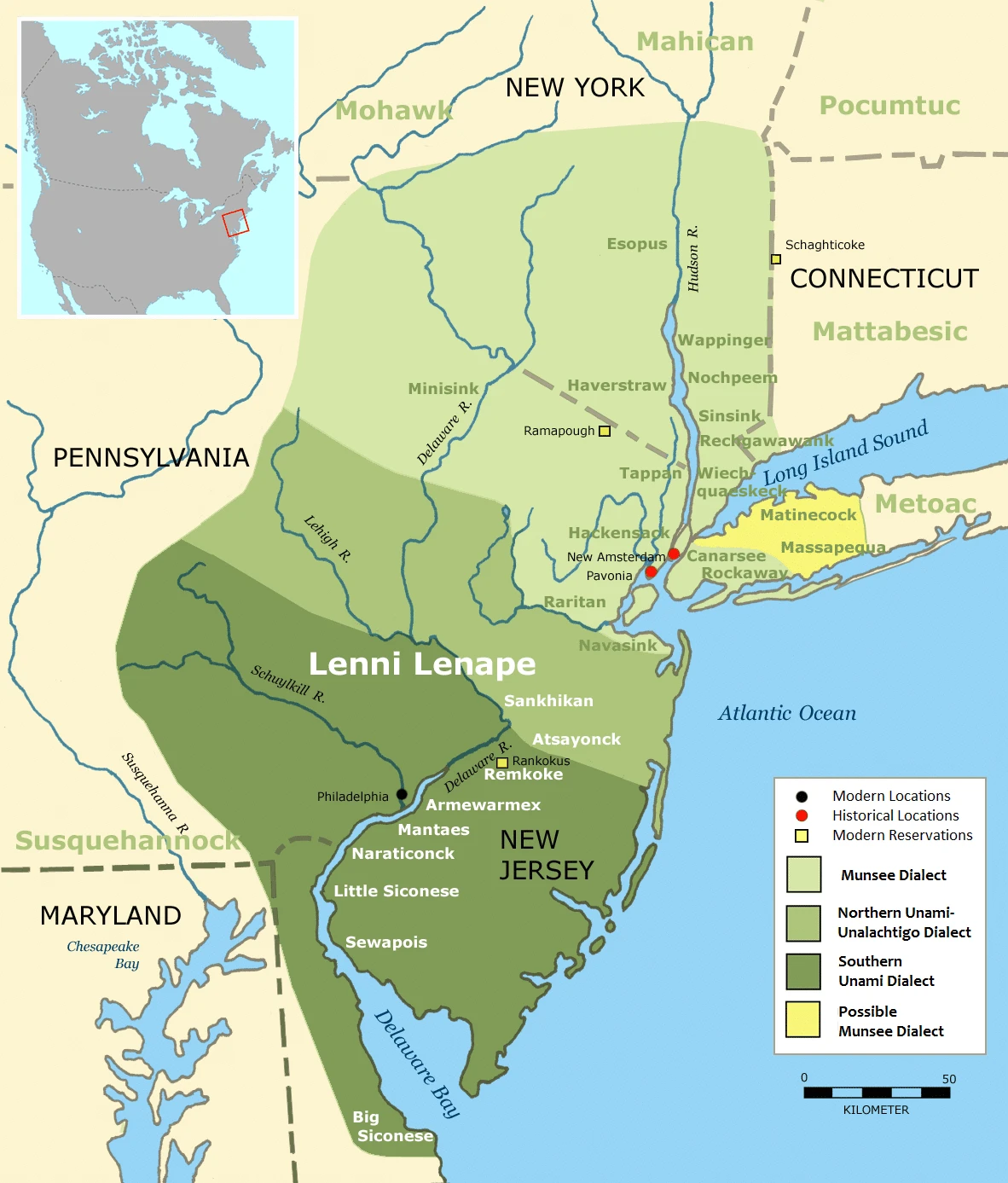
Long before European colonization, the area now known as New York was home to Indigenous peoples, most notably the Lenape. These indigenous communities developed rich and complex societies, each with distinct languages, cultures, and traditions deeply rooted in the land.
Early 17th century (1624–1664): Dutch colonial period
In 1624, Dutch explorers and settlers established New Amsterdam, laying the foundation for a vibrant trade center. The Dutch introduced their language, customs, and governance, fostering a diverse population and leaving a lasting cultural imprint that remains evident in place names and local heritage.
Mid-17th century to late 18th century (1664–1776): British colonial period
Following the English capture of New Amsterdam in 1664, the city was renamed New York in honor of the Duke of York. Under British rule, New York rapidly expanded as a vital colonial economic hub. While English became the dominant language, Dutch influences persisted, particularly in neighborhoods such as Brooklyn and Harlem.
Late 18th century (revolutionary era)
Throughout the 18th century, New York emerged as a key center for trade and commerce in colonial America. Its strategic location made it a focal point during the American Revolutionary War. After independence, New York swiftly rose to prominence as a leading national economic and political center.
Despite challenges like political unrest and economic changes, the state continually evolved, becoming a symbol of opportunity, innovation, and resilience.
Immigrant history of New York
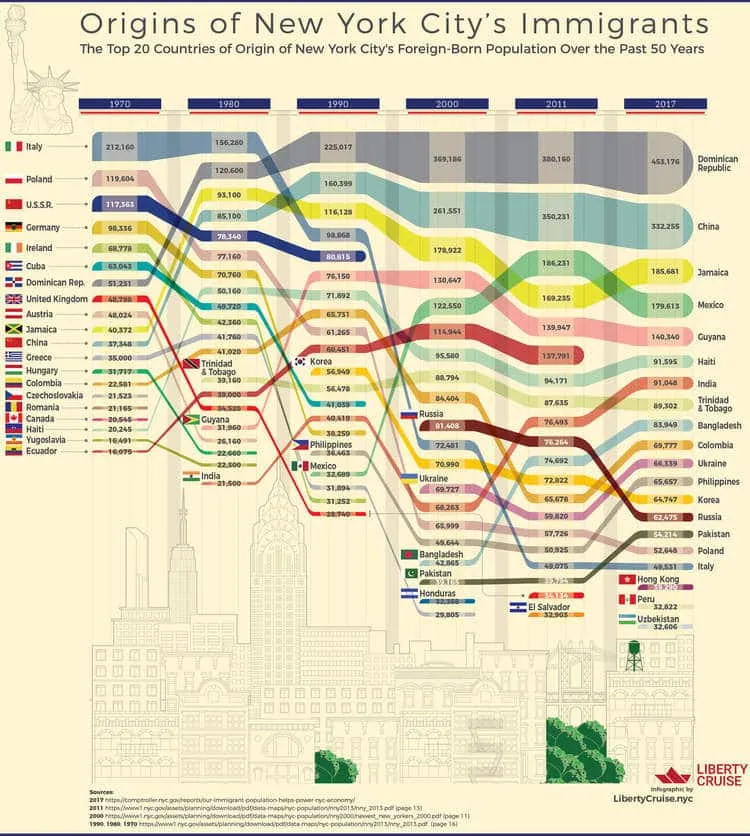
New York City has long served as a gateway for immigrants, earning the title “Golden Door.” For generations, people from around the world have shaped New York’s identity with their languages, cultures, and traditions. From early European arrivals to today’s global communities, immigration has helped build the state’s economy, neighborhoods, and cultural life.
Mid-1800s:
New York saw large numbers of Irish and German immigrants, many fleeing famine and political unrest. They settled in urban areas and worked in construction, factories, and domestic service. These groups helped build New York’s growing economy and formed strong ethnic and religious communities
Late 1800s to early 1900s:
Ellis Island became the main gateway for millions from Southern and Eastern Europe, including Italians, Jews, and Poles. Many lived in crowded neighborhoods and took low-wage jobs in factories. Despite facing hardship, they shaped the cultural and economic life of the city.
Mid-1900s onward:
After World War II, and especially following the Immigration and Nationality Act of 1965, immigration patterns shifted dramatically. Instead of Europeans, new arrivals came mostly from Latin America, Asia, and the Caribbean. These communities brought new languages, cuisines, religions, and customs, enriching New York’s cultural mix. They introduced new languages, traditions, and cultural practices, enriching daily life across both New York City and upstate communities.
The growing importance of multilingualism in New York
As New York State’s population has become culturally diverse, the presence of foreign languages continues to grow, prompting significant steps to promote multilingualism and ensure equitable access to public services.
1: Government
The 2022 Language Access Law requires state agencies to provide interpretation and translate key documents into the 12 most common non-English languages. This ensures equitable access to public services for New York’s diverse, limited English proficient population.
2: Tourism and hospitality
With over 65 million annual visitors, New York remains a top global destination. Multilingual signage, guides, and digital content in Spanish, Chinese, French, and Russian improve the visitor experience and ensure accessibility for international travelers.

3: International trade and business
As a global economic hub, New York depends on multilingual communication for negotiations and client relations. Languages like Spanish, Mandarin, Russian, and Haitian Creole play a vital role in connecting with partners across Latin America, Asia, and Europe.

These diverse efforts across education, government, healthcare, tourism, and trade highlight New York’s commitment to embracing multilingualism as a driver of inclusion, opportunity, and economic growth.
How companies can benefit from translation agencies in New York
New York’s rich linguistic diversity has created a growing demand for content in both local and international languages.
As a result, translation and localization companies have seen steady growth, serving both national and international markets.
Milestone Localization is one such company that supports organizations across New York and around the world with professional translation and localization services. Known for its focus on quality, accuracy, and reliability, the company helps businesses navigate language barriers and communicate effectively with global audiences.
Conclusion
New York reflects its longstanding role as a global hub of culture, migration, and opportunity. With hundreds of languages spoken throughout the city, this multilingual environment shapes every aspect of civic life from education and public policy to commerce and community engagement.
Such diversity not only enriches the social fabric of the city but also highlights the importance of inclusive language policies and culturally responsive services. As New York continues to grow and evolve, its dedication to preserving and supporting linguistic diversity remains essential to fostering equity, access, and unity among its residents.
Are You Looking for professional Translation Services in New York?
FAQs
How many languages are spoken in New York City?
Over 800 different languages are spoken in New York City, making it one of the most linguistically diverse places in the world.
What is the most commonly spoken language in New York City?
English is the most commonly spoken language, used by about 65% of the population at home.
Besides English, which are the top languages spoken in New York?
The next most common languages are Spanish, Chinese (including Mandarin and Cantonese), Russian, Italian, and Haitian Creole.
How do language communities in New York shape neighborhoods?
Certain languages are concentrated in neighborhoods, such as Chinese in Flushing and Manhattan’s Chinatown, Russian in Brighton Beach, and Spanish in areas like the South Bronx and Spanish Harlem.
Why is translation important in New York City?
Due to the city’s cultural and linguistic diversity, translation services are essential for effective communication in schools, hospitals, legal offices, and government services.
What percentage of New Yorkers speak a language other than English at home?
Approximately 35%-48% of New Yorkers speak a language other than English at home, with nearly 25% having limited English proficiency.