
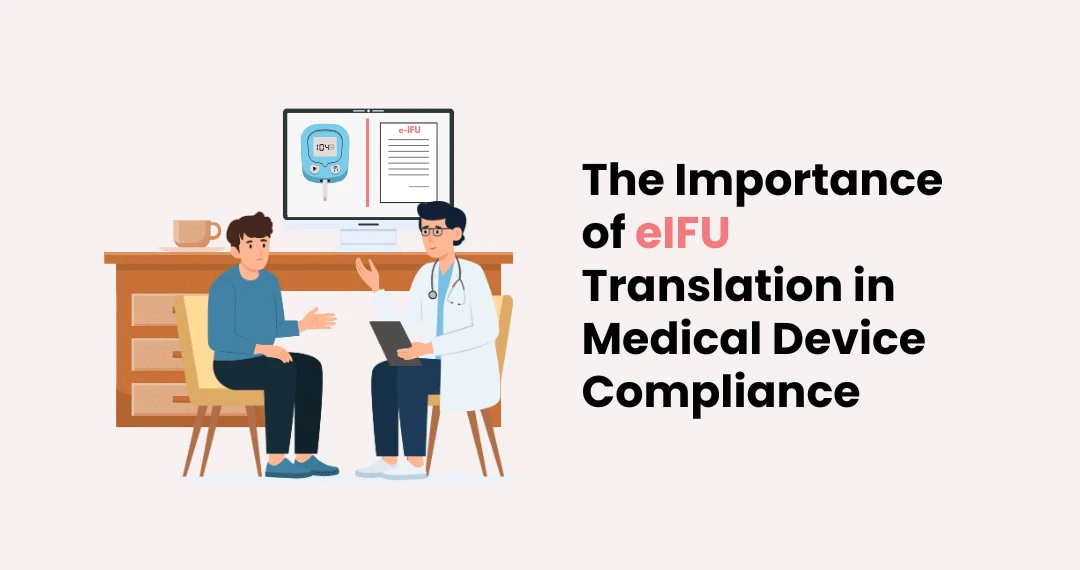
In today’s digital age, electronic Instructions for Use (eIFU) play a vital role in the medical device industry. These digital versions of traditional paper IFUs allow manufacturers to provide real-time updates, improve accessibility, and comply with various global regulatory requirements.
However, ensuring accurate eIFU translation is a complex challenge that directly impacts patient safety, regulatory compliance, and international market access.
With strict regulations governing medical device documentation worldwide, companies must adhere to stringent translation quality assurance standards.
From ISO 13485 compliance to FDA eIFU regulations, a minor error in translation can lead to legal consequences, financial losses, and even patient harm. This blog explores the significance of eIFU translation, regulatory requirements across different markets, industry best practices, and how technology can optimize the process.
Understanding eIFU and Its Regulatory Significance
A: What is an eIFU?
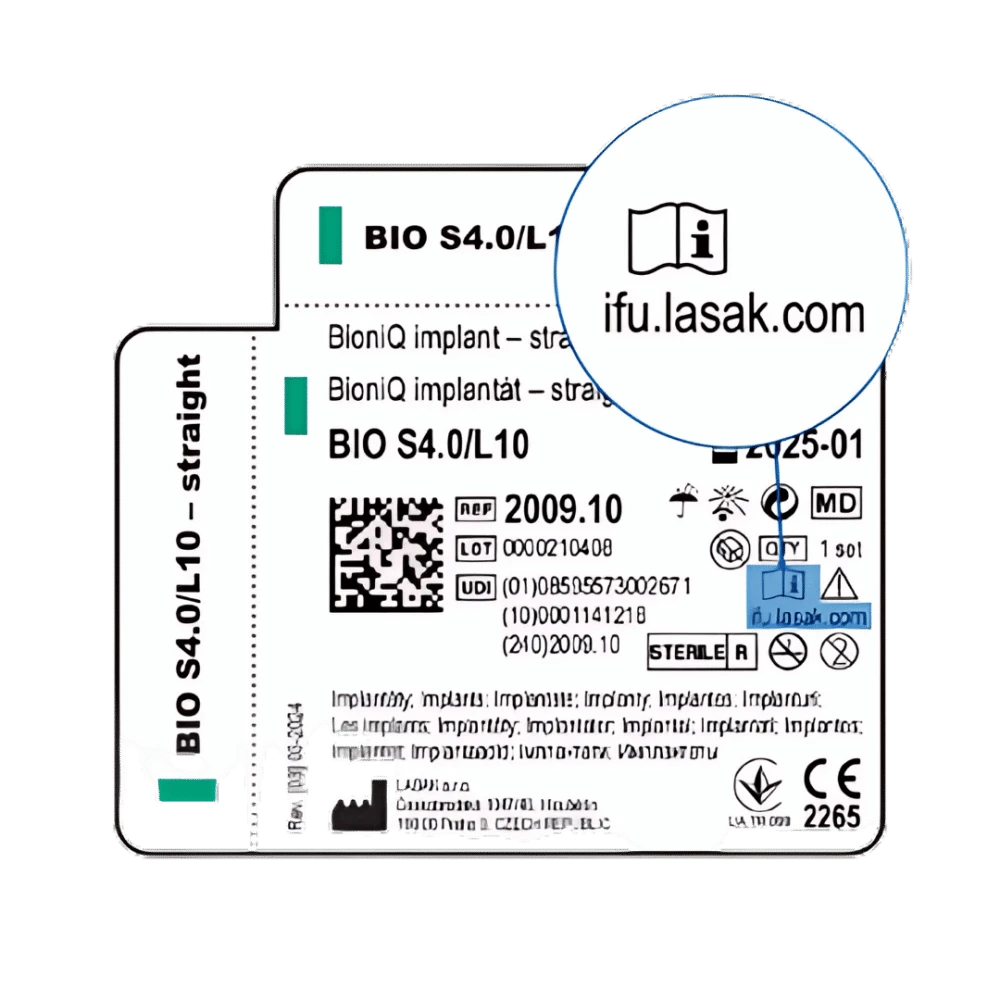
An electronic Instruction for Use (eIFU) is a digital document that provides critical usage and safety information for medical devices. Unlike traditional paper IFUs, eIFUs offer several advantages:
1: Real-Time Updates
Manufacturers can provide immediate regulatory changes and safety updates.
2: Cost Savings
Eliminates printing and distribution costs.
3: Enhanced Accessibility
Users can access translations in multiple languages via a single platform.
4: Environmental Benefits
Reduces paper waste and carbon footprint.
Also read: IFU Translation: Importance, Requirements & Best Practices
B: Regulatory Advantages of eIFUs
Several regulatory bodies encourage or mandate the use of eIFUs due to their efficiency and sustainability. Some key benefits include:
1: Improved Compliance Tracking
Digital versions allow easier documentation and regulatory audits.
2: Language Adaptability
eIFUs enable manufacturers to distribute information in required languages efficiently.
3: Reduction in Human Errors
Automated updates prevent outdated instructions from circulating.
Global Regulatory Requirements for eIFU Translation
Ensuring accurate translation of electronic Instructions for Use (eIFUs) is crucial for medical device manufacturers aiming to comply with global regulatory standards. Below is an overview of key regulatory requirements across various regions:
1. European Union (EU)
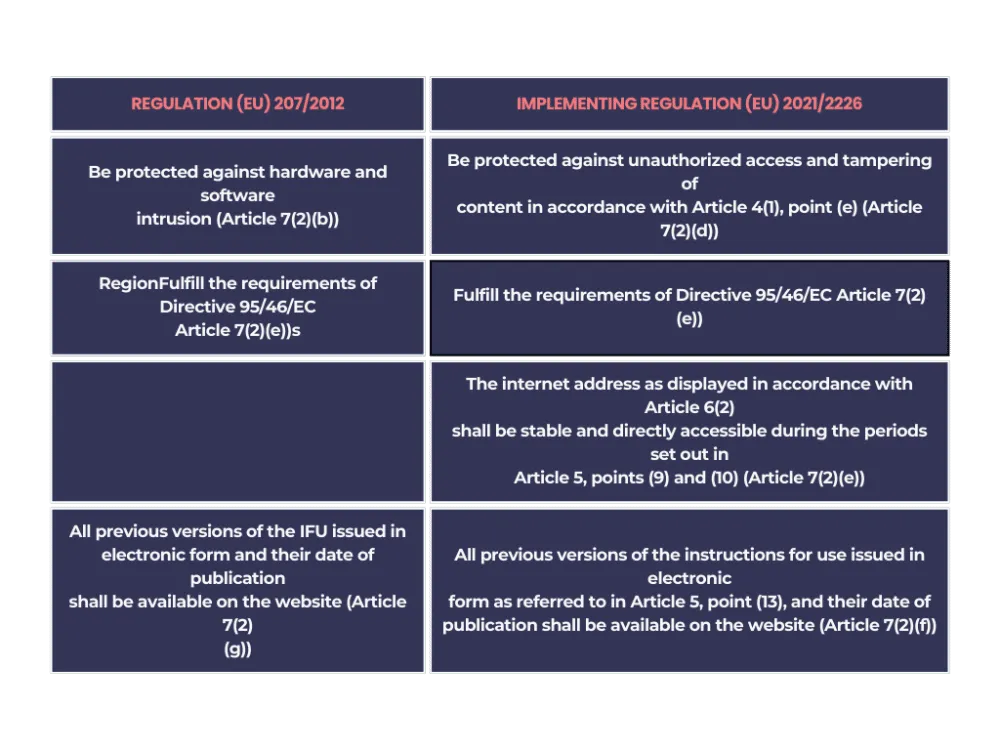
The EU’s Medical Device Regulation (MDR) 2017/745 and In Vitro Diagnostic Regulation (IVDR) 2017/746 set forth comprehensive guidelines for medical device documentation, including language requirements:
a: Article 10(11) of EU MDR
“Manufacturers shall ensure that the device is accompanied by the information set out in Section 23 of Annex I in an official Union language(s) determined by the Member State in which the device is made available to the user or patient.” Source: EUR-Lex, Regulation (EU) 2017/745, Article 10(11)
b: Member State Language Specifications
Each EU country specifies its own language requirements. For example, Belgium requires documentation in Dutch, French, and German.
2. United States (FDA Compliance)
The U.S. Food and Drug Administration (FDA) oversees medical device labeling under 21 CFR Part 801:
a: Primary Language
The FDA requires that all medical device labeling be in English, though there is no explicit prohibition against including additional languages. Source: FDA, 21 CFR Part 801.15
b: Accessibility Requirements
The FDA emphasizes that instructions must be understandable to the intended user. For devices intended for use by non-English speakers, appropriate translations should be considered.
3. Canada (Health Canada Regulations)
Health Canada enforces bilingual labeling requirements for medical devices:
a: Mandatory Bilingual Labeling
“The labelling of a medical device shall be in either English or French or both languages.” Source: Medical Devices Regulations (SOR/98-282), Section 21
b: Specific Requirements
“If the medical device is sold to the general public, the directions for use shall be in both English and French.” Source: Medical Devices Regulations (SOR/98-282), Section 23(1)
4. Asia-Pacific & Other Key Regions
Several countries in the Asia-Pacific region have established their own translation mandates for medical devices:
a: China
The National Medical Products Administration (NMPA) requires that all medical device labels and IFUs be in Simplified Chinese. Source: NMPA, Order No. 6 (2014), Chapter III, Article 28
b: Japan
The Pharmaceuticals and Medical Devices Agency (PMDA) requires that IFUs be in Japanese. According to the Pharmaceutical and Medical Device Act, Article 63-2, all labeling information must be in Japanese. Source: PMDA, Act on Securing Quality, Efficacy and Safety of Products
c: Brazil
ANVISA requires that all medical device labels and instructions be in Portuguese.
d: Australia
The Therapeutic Goods Administration (TGA) requires that Instructions for Use be in English. Source: TGA, Therapeutic Goods (Medical Devices) Regulations 2002, Schedule 1, Part 13.4
Understanding and adhering to these diverse regulatory requirements is essential for medical device manufacturers aiming to operate in global markets. Accurate eIFU translations not only ensure compliance but also enhance patient safety and device efficacy.
Are you Looking for Certified e-IFU translation services?
Industry Standards for eIFU Translation
A: Best Practices for eIFU Translation
1: Use of ISO 17100 Certified Agencies
Ensures high-quality, regulatory-compliant translations.
2: Linguistic Validation & Back Translation
Reduces errors and ensures accuracy.
3: Regulatory Review & Harmonization
Aligns translations with evolving local laws.
B: Role of ISO Standards in eIFU Translation
1: ISO 13485 Compliance
Ensures translation processes meet medical device quality management standards.
2: ISO 17100 Translation Standard
Guarantees professional translation practices with expert linguists.
Common Pitfalls in Medical Device eIFU Translation & How to Avoid Them
When implementing electronic Instructions for Use (eIFUs) for medical devices across global markets, manufacturers frequently encounter several critical challenges.

A. Regulatory Non-Compliance
Failing to align with regional regulations can result in severe consequences:
1: Market Access Barriers
Regulatory bodies may deny or revoke market authorization for products with non-compliant documentation
2: Financial Penalties
Substantial fines that can reach into millions of dollars depending on the severity and jurisdiction
3: Mandatory Recalls
Authorities may require product removal from the market until documentation meets standards
4: Reputational Damage
Loss of trust among healthcare providers and patients
Best Practice: Implement a dedicated regulatory intelligence system that tracks documentation requirements across all target markets, with automated alerts for regulatory changes.
B. Translation Quality Issues
Poor quality translations can compromise patient safety and create legal vulnerability:
1: Critical Safety Information Misinterpretation
Incorrect translation of warnings, contraindications, or dosage information can lead to adverse events
2: Technical Accuracy Failures
Mistranslation of technical specifications or procedural steps may render devices unusable or dangerous
3: Cultural Insensitivity
Failing to account for regional healthcare practices and terminology can reduce comprehension
4: Legal Exposure
Documentation errors have been central to numerous medical device liability lawsuits
Best Practice: Employ specialized medical translators with device-specific expertise, implement rigorous back-translation verification processes, and conduct linguistic validation testing with target users.
Also read: Quality Assurance In Medical Device Translations
C. Suboptimal Digital User Experience
Even accurately translated content can fail if the digital presentation is flawed:
1: Navigation Complexity
Overly complicated eIFU interfaces may prevent users from finding critical information quickly
2: Device Compatibility Issues
Poor rendering across different screen sizes and devices can make instructions inaccessible
3: Search Functionality Limitations
Inadequate search features can hide important safety information
4: Accessibility Barriers
Failure to accommodate users with disabilities contravenes many regional regulations
Best Practice: Conduct user experience testing with healthcare professionals from target markets, implement responsive design principles, and ensure compliance with digital accessibility standards (WCAG 2.1 AA or higher).
D. Inadequate Version Control & Updates
Medical device regulations and product specifications evolve continuously:
1: Regulatory Drift
Maintaining outdated translations while regulations change creates compliance gaps
2: Product Modification Misalignment
Failure to update documentation when device features change creates safety risks
3: Inconsistent Global Documentation
Different markets operating with different versions of instructions creates confusion
4: Audit Trail Deficiencies
Inability to demonstrate documentation history during regulatory inspections
Best Practice: Implement a centralized translation management system with automated version control, regular compliance audits, and a systematic process for propagating updates across all language versions simultaneously.
E. Cost Management Failures
Balancing quality with budget constraints presents ongoing challenges:
1: Underinvestment
Cutting corners on translation quality creates disproportionate risk compared to potential savings
2: Inefficient Processes
Lack of translation memory systems and terminology databases leads to redundant translation costs
3: Emergency Remediation Expenses
Rushed corrections for compliance issues typically cost 3-5 times more than proper initial implementation
Best Practice: Develop a comprehensive translation strategy that leverages technology for efficiency while maintaining appropriate investment in quality assurance processes that prevent costly compliance failures.
Choosing the Right Translation Partner for eIFU Compliance
Key Criteria for Selecting a Medical Translation Provider
1: ISO-Certified Agencies
Ensure compliance with ISO 13485 and ISO 17100.
2: Industry Expertise & Regulatory Knowledge
Choose providers specializing in medical device translation.
3: Quality Assurance (QA) Processes
Look for rigorous linguistic validation and back translation procedures.
Also read: Medical Translation Agency : How To Choose The Right One?
Conclusion
Accurate eIFU translation remains essential for regulatory compliance and patient safety in the medical device industry. Different regions have specific translation mandates through EU MDR, FDA, and Health Canada regulations, while industry standards like ISO 13485 and ISO 17100 help ensure high-quality translations.
Reliable e-IFU Translation Services
FAQs
Why is eIFU translation important for medical device compliance?
eIFU translation is essential because electronic instructions for use must be clearly understood by end users in their local language. Accurate translation ensures proper device handling, reduces user errors, and supports compliance with regulatory requirements in each target market.
Which regulations govern the translation of eIFUs?
Translation of eIFUs is governed by regional regulations such as the EU Medical Device Regulation (MDR 2017/745), FDA guidelines in the United States, and other national language laws. These regulations often require that safety and usage information be available in the official language(s) of the country where the device is distributed.
What languages should eIFUs be translated into?
The required languages depend on the markets where the device is sold. For example, within the European Union, eIFUs must typically be translated into the official language(s) of each member state unless local authorities explicitly permit otherwise.
How does accurate eIFU translation improve patient and user safety?
Accurate translation ensures that healthcare professionals and end users can correctly understand operation instructions, warnings, contraindications, and maintenance procedures. This reduces the risk of device misuse, adverse events, and clinical complications.
Who should perform eIFU translations?
eIFU translations should be completed by qualified medical translators with expertise in the device’s technical field. Ideally, translation should be managed by an agency certified to ISO 17100 and ISO 13485, ensuring structured workflows and multi-level quality review.
How is consistency maintained across different versions of eIFUs?
Consistency is maintained through the use of translation memory tools, approved terminology databases, version control systems, and standardized review processes. This ensures uniform and accurate terminology even when updates or new device versions are released.