

Introduction: The Critical Role of Translation in Healthcare
In today’s globalized healthcare environment, accurate medical translation directly impacts patient safety outcomes. Clear communication across languages ensures proper medication administration, informed consent, and treatment adherence.
Worldwide, millions of patients receive healthcare in languages they don’t fully understand. These patients experience adverse events at 2-3 times the rate of those proficient in the local language due to communication barriers. HelloGlobo
Healthcare systems globally now face an important decision: should they rely on human translators with medical expertise and cultural competence, or implement increasingly sophisticated machine translation technologies? This comparison examines both approaches, focusing on what matters most—protecting patient safety through accurate medical communication.
Understanding Human Translation in Healthcare Settings
A: Qualifications of Professional Medical Translators
Professional medical translators stand at the intersection of linguistic fluency and healthcare expertise. Their qualifications typically include:
1: Medical knowledge requirements
Most qualified medical translators possess specialized education in medical terminology, anatomy, pharmacology, and healthcare procedures. This ensures accurate translation of complex concepts beyond simple word-for-word conversion.
2: Cultural competency training
Effective medical translators understand that healthcare communication extends beyond words. Cultural beliefs about health, illness, treatments, and family involvement vary dramatically across populations. Translators receive training to navigate these differences sensitively.
3: Ethical obligations and confidentiality
Professional medical translators adhere to strict codes of ethics, maintaining patient confidentiality and regulations and healthcare standards. This includes properly handling sensitive medical information and maintaining professional boundaries
B: Advantages of Human Medical Translation
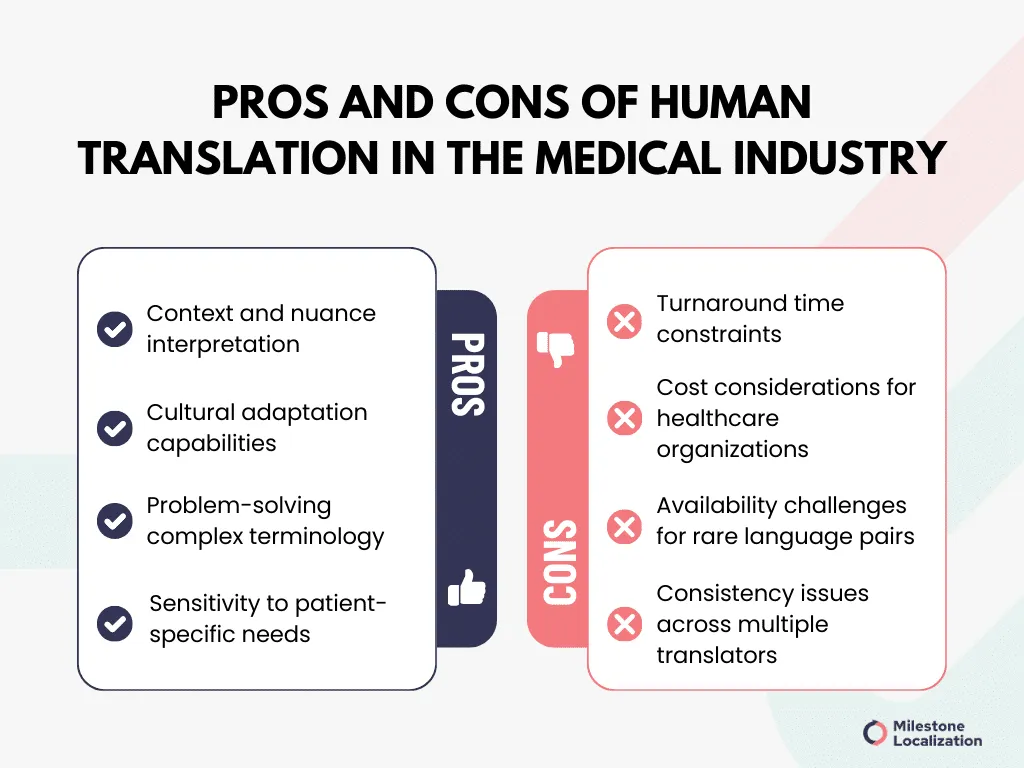
Human translators bring distinctive capabilities to healthcare communication that remain difficult for machines to replicate:
1: Context and nuance interpretation
Human translators excel at understanding contextual clues and implied meanings that may not be explicitly stated in the original text. They can detect when a patient is expressing pain, confusion, or anxiety through subtle linguistic cues.
2: Cultural adaptation capabilities
Healthcare communication is deeply embedded in cultural contexts. Human translators can adapt content to account for cultural sensitivities, taboos, and preferences while preserving the clinical meaning. This adaptation is particularly crucial for mental health information, end-of-life discussions, and reproductive health topics.
3: Problem-solving complex terminology
When confronted with unusual medical terminology or newly developed procedures without direct linguistic equivalents, human translators can research and develop appropriate translations that capture the essential meaning.
4: Sensitivity to patient-specific needs
Professional translators can adjust their communication style based on a patient’s educational level, health literacy, emotional state, and specific circumstances, ensuring information is accessible to the individual.
C: Limitations of Human Medical Translation
Despite their strengths, human medical translators face several significant constraints:
1: Turnaround time constraints
The demand for quick translation in emergency situations can challenge even the most skilled human translators. In urgent medical scenarios, waiting for human translation services may delay critical care.
2: Cost considerations for healthcare organizations
Professional medical translation services represent a significant expense. Small healthcare providers and those serving diverse populations with multiple language needs often struggle with the financial burden of comprehensive human translation services.
3: Availability challenges for rare language pairs
Finding qualified medical translators for less common languages presents a substantial challenge. Many healthcare facilities cannot maintain staff translators for all language needs, particularly for languages with limited representation in their patient population.
4: Consistency issues across multiple translators
When multiple translators work on different components of a patient’s care documents, inconsistencies in terminology and style may emerge, potentially leading to confusion.
D: Advantages of AI Translation for Healthcare Materials
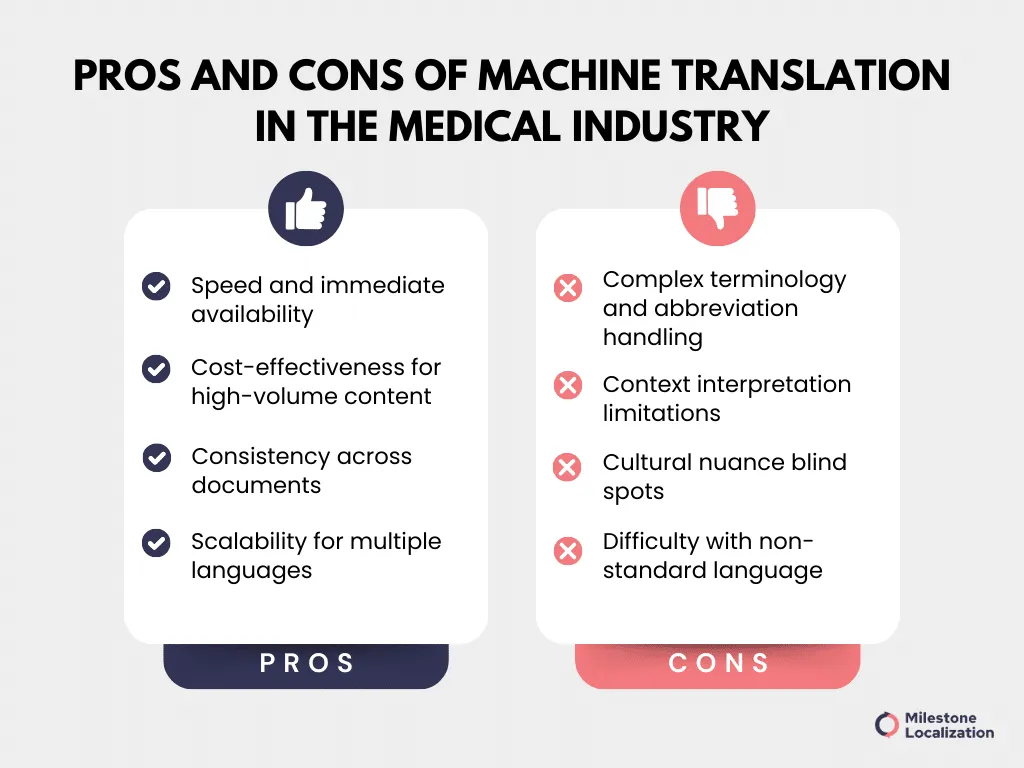
Machine translation offers several compelling benefits for healthcare organizations:
1: Speed and immediate availability
AI translation provides instantaneous results, making it valuable in emergency situations where rapid communication across language barriers could save lives.
2: Cost-effectiveness for high-volume content
For healthcare systems generating large volumes of multilingual materials, machine translation offers significant cost advantages. While initial implementation may require investment, the marginal cost of additional translations approaches zero.
3: Consistency across documents
Machine translation maintains perfect consistency in terminology and phrasing across all documents, eliminating the variation that can occur with multiple human translators working on different parts of a patient’s medical information.
4: Scalability for multiple languages
Modern machine translation systems support dozens or even hundreds of language pairs, allowing healthcare organizations to provide materials in virtually any language their patients might speak—including rare languages for which qualified human translators are scarce.
E: Persistent Challenges in Medical Machine Translation
Despite impressive advances, machine translation still faces significant limitations in healthcare contexts:
1: Complex terminology and abbreviation handling
While specialized medical AI engines have improved terminology recognition, they still struggle with unusual abbreviations, facility-specific shorthand, and newly coined medical terms not yet incorporated into their training data.
2: Context interpretation limitations
AI systems may miss crucial contextual cues that would be obvious to human translators. This limitation becomes particularly problematic when translating nuanced content like mental health assessments, pain descriptions, or symptom reports.
3: Cultural nuance blind spots
Machine translation typically performs direct linguistic conversion without cultural adaptation. This limitation can result in translations that, while technically accurate, may fail to account for cultural beliefs, taboos, or communication norms relevant to healthcare decisions.
4: Difficulty with non-standard language
Machine translation performs best with standardized language and structured content. It struggles with dialects, patient-specific expressions of symptoms, colloquialisms, and the irregular speech patterns common in clinical settings.
Limited training data and capabilities for rare languages: While major languages benefit from extensive training data, less common languages suffer from data scarcity issues. This results in significantly lower translation quality for rare language pairs—often the very languages where human translators are also difficult to find.
Quantifying Translation Errors and Their Impact on Patient Safety
A: Research on Translation Error Rates: Human vs. Machine
To make informed decisions about translation approaches, healthcare organizations need objective data comparing error rates and types:
1: Statistical comparison of error types and frequencies
Studies analyzing medical interpretation errors have found that human translators average 31 errors per clinical encounter, with omissions being the most frequent type. However, machine translation typically produces higher error rates, particularly for complex medical content. PubMed
2: Critical vs. non-critical error categories
Not all translation errors carry equal risk. Research categorizes errors based on their potential clinical impact:
- Critical errors: Mistakes that could directly lead to patient harm, such as incorrect medication dosages, contraindication omissions, or reversed instructions (e.g., “take with food” vs. “take without food”).
- Major errors: Errors that significantly alter meaning but may not directly cause harm, such as omitted side effects or mistranslated anatomical references.
- Minor errors: Small inaccuracies that don’t significantly affect patient understanding or safety, like stylistic issues or non-critical word choice problems.
3: Language pair variation factors
Error rates vary dramatically depending on the specific language pairs involved. Structurally similar languages (like Spanish and Portuguese) typically show lower error rates than dissimilar language pairs (like English and Chinese). Additionally, the availability of training data significantly affects machine translation performance across language pairs.
4: Error detection methodology
- Researchers use various methodologies to identify and classify translation errors, including:
- Back-translation (translating the translated text back to the original language to check for discrepancies)
- Bilingual expert review using standardized assessment tools
- Computational evaluation metrics like BLEU (Bilingual Evaluation Understudy), ROUGE, and human evaluation scores for adequacy and fluency
- Clinical risk assessment frameworks specific to healthcare content PMC Articles
Regulatory and Compliance Considerations

A: HIPAA and Patient Data Protection in Translation Processes
Beyond accuracy, translation services must comply with stringent healthcare privacy regulations:
1: Data security requirements for translation services
Under HIPAA regulations, all protected health information (PHI) must be secured during the translation process. This includes implementing appropriate technical safeguards, data encryption, and access controls whether using human translators or machine systems.
2: Risks associated with free online machine translation tools
Many popular free translation tools store inputted text on public servers and may use it to improve their algorithms. This practice can constitute a HIPAA violation if PHI is processed through these systems. Healthcare organizations must either use specialized, HIPAA-compliant translation services or establish business associate agreements with technology providers.
3: Compliance certification for translation providers
Professional medical translation services typically maintain various certifications attesting to their compliance with healthcare regulations, including HIPAA, GDPR (for European data), and industry-specific standards. These certifications provide assurance that patient data remains protected throughout the translation workflow.
4: Documentation and audit trail requirements
Healthcare organizations must maintain comprehensive records of all translation processes, including who performed translations, when they occurred, what review protocols were followed, and how accuracy was verified. This documentation is essential for regulatory compliance and may be crucial in case of adverse events or legal challenges. To support this need, centralized document management and version control are essential and can be effectively handled through an employee intranet CMS, helping healthcare teams manage multilingual content and maintain compliance-ready audit trails.
B: Global Healthcare Translation Standards
Healthcare translation operates within a framework of international standards and requirements:
1: ISO certification for medical translation services
The International Organization for Standardization has established specific standards for healthcare interpretation services. ISO 21998:2020 specifies requirements and recommendations for healthcare interpreting in both spoken and signed communication, providing a global benchmark for quality. ISO
2: Country-specific healthcare translation regulations
Many countries have enacted specific legislation governing translation in healthcare settings:
In the United States, Title VI of the Civil Rights Act requires healthcare organizations receiving federal funding to provide language assistance to LEP individuals.
The European Union’s Directive 2011/24/EU establishes patients’ rights to receive information in their language when seeking cross-border healthcare.
Canada’s Official Languages Act mandates bilingual healthcare services in federal institutions.
3: Accreditation requirements for healthcare translators
Professional bodies like the National Board of Certification for Medical Interpreters and the Certification Commission for Healthcare Interpreters establish standardized requirements for translator qualifications, including educational background, training hours, and examination performance.
4: Legal defensibility of different translation approaches
In case of adverse events related to translation errors, healthcare organizations must demonstrate they took reasonable steps to ensure accurate communication. Courts increasingly examine whether appropriate translation resources were utilized based on document criticality and organizational capacity.
A Risk-Based Framework for Choosing Human vs. Machine Translation
A: Assessing Document Criticality and Risk Level
Not all healthcare documents carry the same level of risk, suggesting a stratified approach to translation method selection:
B: High-risk documents requiring human translation
Documents with direct impact on clinical decisions and patient safety typically require human translation with specialized knowledge:
- Informed consent forms
- Surgery and procedure instructions
- Medication guides with dosage information
- Discharge instructions for complex conditions
- Advanced directives and end-of-life care documentation
For these materials, the potential consequences of mistranslation far outweigh any time or cost savings from machine translation.
1: Medium-risk documents suitable for machine translation with human review: Many healthcare materials contain important information but pose lower immediate risks if minor translation issues occur:
- General health education materials
- Routine appointment instructions
- Standard pre-procedure preparations
- Facility information and policies
- Non-critical follow-up care instructions
2: Low-risk content appropriate for machine translation: Some healthcare content serves primarily informational purposes with minimal risk of patient harm:
- General wellness information
- Facility directions and resources
- Administrative communications
- Public health announcements
- Basic nutritional guidance
These materials may be suitable for machine translation with basic quality checks rather than comprehensive human review.
3: Decision matrix for healthcare translation managers: Organizations can develop structured decision frameworks incorporating factors such as:
- Document purpose and criticality
- Target patient population characteristics
- Available translation resources and timeframe
- Regulatory requirements for specific document types
- Language pair complexity and machine translation performance
C: Language Pair Considerations
The specific languages involved significantly impact translation approach decisions:
1: Common vs rare language combinations
For widely spoken languages like Spanish, Mandarin, and Arabic, both qualified human translators and robust machine translation systems are typically available. However, for less common languages and dialects, human translators may be scarce while machine translation quality remains poor due to limited training data.
2: Structurally similar vs. dissimilar languages
Machine translation generally performs better between languages with similar linguistic structures, such as Romance languages (Spanish, French, Italian) or Germanic languages (English, German, Dutch). Greater linguistic distance—such as between English and Japanese—typically results in lower machine translation quality and higher error rates.
3: Resource availability factors
- Practical considerations often drive translation decisions:
- Available budget for translation services
- Urgency of the translation need
- In-house capabilities for quality review
- Access to qualified translators for specific language pairs
- Patient volume for particular language groups
4: Technology maturity by language pair
Machine translation quality varies dramatically across language pairs. For some high-resource languages, neural machine translation approaches human-level quality for certain content types. For low-resource languages, even state-of-the-art systems may produce barely usable output, necessitating human translation regardless of other factors.
Hybrid Approaches: Combining Human Expertise with Technology
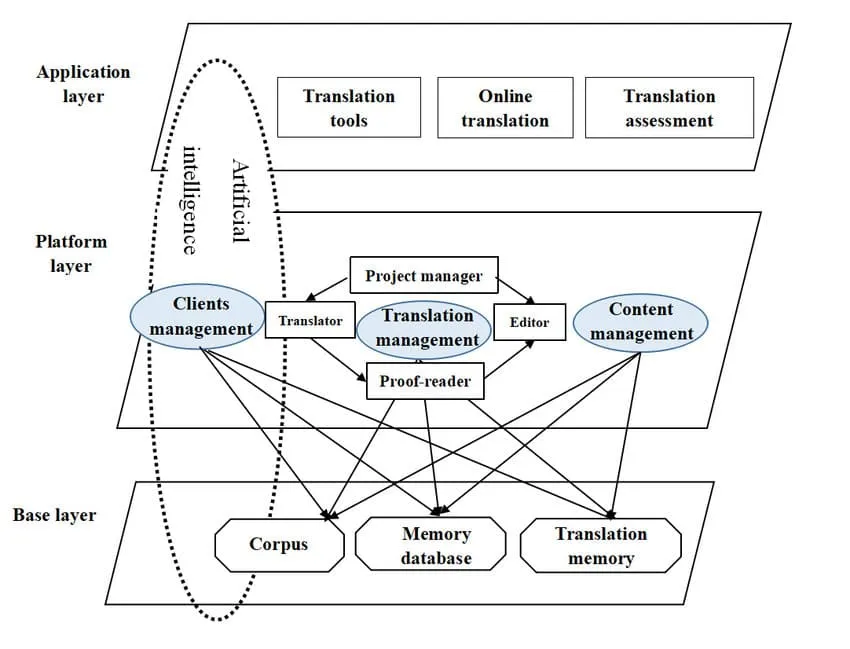
A: AI Post-Editing (AIPE)
A promising middle path combines the efficiency of machine translation with human expertise:
1: Workflow and process overview
In the AIPE approach, content first undergoes machine translation, generating a draft that human translators then review, correct, and refine. This process leverages technology for the initial heavy lifting while ensuring human verification of accuracy, cultural appropriateness, and contextual nuance.
2: Efficiency gains compared to pure human translation
Research indicates that post-editing machine translations can improve productivity by 40-60% compared to from-scratch human translation, while maintaining comparable quality levels. This efficiency allows healthcare organizations to provide more translated materials across more languages with the same resources. Smartling
3: Quality benchmarks and standards
The ISO 18587 standard specifically addresses post-editing of machine translation output, establishing guidelines for both “light” post-editing (focusing only on critical errors) and “full” post-editing (comprehensive revision to near-human translation quality). Healthcare organizations typically require full post-editing for patient-facing materials.
4: Cost and time implications
AIPE typically costs 40-60% less than traditional human translation while reducing turnaround times by 30-50%. However, this approach still requires investment in qualified post-editors with medical knowledge, making it more expensive than raw machine translation.
According to a 2023 report, the U.S. Department of Health and Human Services is moving toward mandating machine translation post-editing for critical healthcare texts, recognizing both the efficiency benefits and quality limitations of raw machine translation. Slator
Also Read: FDA Translation Requirements: Your Essential Guide to Regulatory Success in US Markets
B: Translation Memory and Terminology Management
Advanced translation technologies enhance both human and machine translation:
1: Building healthcare-specific translation assets
Healthcare organizations can develop customized translation memories—databases of previously translated content pairs—along with specialized terminology glossaries for their specific medical specialties, procedures, and facility terminology.
2: Consistency and quality improvements
When translators (human or machine) access organization-specific translation memories and terminology databases, they can maintain perfect consistency in how specific terms, phrases, and concepts are translated across all patient materials.
3: Reducing both human and machine errors
Pre-approved translations for complex medical terminology reduce the risk of inconsistent or inaccurate translations, regardless of whether humans or machines perform the initial translation work.
4: Integration with electronic health record systems
Leading healthcare organizations are beginning to integrate translation capabilities directly into their electronic health record systems, allowing for streamlined workflow and consistent terminology across all patient communications, from admission documents to discharge instructions.
Patient Perspectives on Translation Quality
A: Trust and Confidence in Translated Materials
The patient experience with translated materials significantly impacts healthcare outcomes:
1: Research on patient preferences
Studies indicate that patients generally express higher levels of trust in materials they believe were translated by human professionals rather than machines. This perception of quality influences how seriously patients take the medical information provided and their willingness to follow recommendations.
2: Perception differences by demographic groups
Trust in translated materials varies based on factors such as:
- Age (older patients typically prefer human translation)
- Education level (higher education correlates with greater acceptance of machine translation)
- Previous experiences with translation services
- Cultural background and language status
3: Impact on treatment adherence
Research shows that patients who fully understand their treatment instructions demonstrate 30% higher medication adherence rates. High-quality translation directly contributes to this understanding for LEP patients, making it a crucial factor in treatment success. PMC Articles
4: Communication satisfaction metrics
Healthcare organizations increasingly measure patient satisfaction with translated materials as part of their quality metrics, recognizing that patient perception of communication quality correlates with overall satisfaction and healthcare outcomes.
Are you Looking for Professional medical translation services?
Future Developments in Healthcare Translation
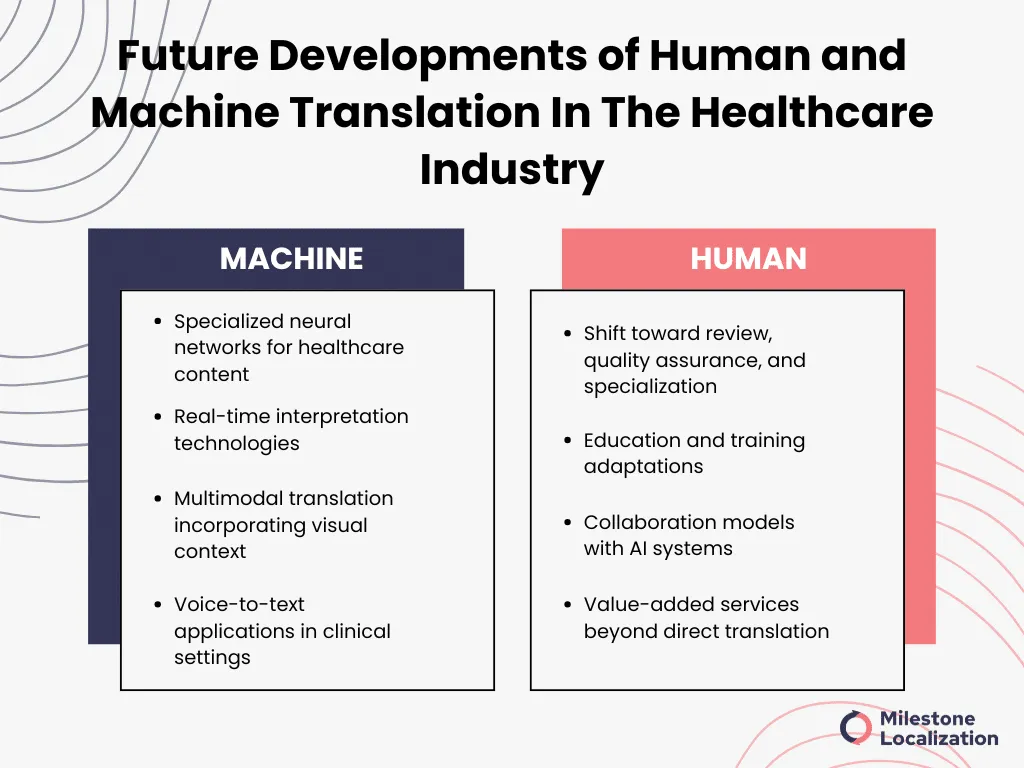
A: Emerging AI Technologies for Medical Translation
The translation landscape continues to evolve rapidly:
1: Specialized neural networks for healthcare content
Next-generation AI translation systems specifically designed for healthcare applications incorporate medical knowledge graphs, clinical terminology databases, and contextual understanding of healthcare scenarios. These specialized systems significantly outperform general-purpose translation AI for medical content.
2: Real-time interpretation technologies
Emerging AI systems can provide near-simultaneous interpretation of spoken language in clinical settings, potentially revolutionizing provider-patient communication. While still developing, these technologies may eventually enable natural multilingual conversations in healthcare without human interpreters.
3: Multimodal translation incorporating visual context
Advanced systems begin to incorporate visual context alongside text, allowing more accurate translation of materials that combine textual and visual elements—such as anatomical diagrams, surgical instructions, or medical device guides.
4: Voice-to-text applications in clinical settings
AI technologies that can convert spoken language to text in multiple languages show promise for documenting patient encounters across language barriers, potentially improving both immediate communication and documentation accuracy.
B: Evolving Roles for Human Translators
As technology advances, human translators’ roles will transform rather than disappear:
1: Shift toward review, quality assurance, and specialization
Human translators increasingly focus on reviewing and improving machine-generated translations rather than performing the initial translation work. This shift emphasizes judgment, quality assurance, and deep subject matter expertise rather than raw translation speed.
2: Education and training adaptations
Medical translator training programs increasingly incorporate technology components, preparing professionals to work effectively with AI translation tools, post-editing workflows, and terminology management systems.
3: Collaboration models with AI systems
Emerging human-AI collaboration frameworks leverage the complementary strengths of both, with AI handling large-volume, repetitive content while human translators focus on nuanced, high-stakes materials requiring cultural sensitivity and contextual understanding.
4: Value-added services beyond direct translation
Human translators increasingly provide supplementary services such as cultural consultation, patient education development, health literacy assessment, and localization strategy—areas where their human judgment and cultural expertise remain irreplaceable.
Conclusion: Balancing Safety, Efficiency, and Access
The question of human versus AI translation in healthcare ultimately defies simplistic answers. The optimal approach depends on numerous factors including document criticality, language pair, available resources, timeframe, and regulatory requirements.
Also read: 10 Reasons To Work With a Medical Translation Agency
A: Key Findings and Recommendations
Based on current research and industry best practices, healthcare organizations should consider the following guidelines:
- Implement a tiered risk assessment framework that categorizes healthcare materials based on their potential impact on patient safety and clinical decisions, determining appropriate translation approaches for each tier.
- Adopt hybrid approaches for most healthcare content, leveraging machine translation with human post-editing to balance efficiency and accuracy.
- Reserve pure human translation for the most critical patient-facing materials where errors could lead directly to patient harm or adverse events.
- Invest in healthcare-specific translation technologies including specialized neural machine translation engines, terminology management systems, and translation memories.
- Establish rigorous quality control processes for all translated materials, including standardized review protocols, error categorization, and regular quality audits.
- Maintain comprehensive documentation of translation processes, quality checks, and validation procedures to ensure regulatory compliance and defensibility.
B: Decision-Making Framework for Healthcare Organizations
Healthcare providers can develop a structured approach to translation decisions:
- Assess document criticality: Categorize based on potential impact on clinical decisions and patient safety
- Evaluate language factors: Consider language pair, available resources, and technology maturity
- Determine time sensitivity: Balance accuracy requirements against urgency needs
- Review regulatory requirements: Ensure compliance with applicable healthcare translation standards
- Consider patient demographics: Account for health literacy, cultural factors, and communication preferences
- Analyze resource constraints: Balance quality requirements against available budget and resources
- Work with a specialised language company to implement AI translations: Work with a specialised medical translation company to implement AI workflows for your translation needs
C: Final Verdict on Human vs. Machine Translation for Patient Safety
The evidence suggests a nuanced conclusion:
While AI has made remarkable progress, it does not yet match human translation for highly complex, nuanced healthcare content where errors could directly impact patient safety. However, machine translation with professional post-editing provides a viable middle path that combines efficiency with accuracy for many healthcare materials.
The future likely belongs to thoughtfully designed hybrid approaches that leverage both technological capabilities and human expertise to ensure all patients, regardless of language background, receive accurate, understandable healthcare information. This balanced strategy maximizes both safety and accessibility—ensuring translation choices themselves do no harm.
Healthcare organizations that implement sophisticated, risk-stratified translation frameworks will not only protect patient safety, but also improve health outcomes, enhance patient satisfaction, reduce healthcare disparities, and potentially mitigate legal and regulatory risks associated with inadequate language access.
As medical knowledge and language technologies continue to evolve, so too must our approaches to healthcare translation—always keeping patient safety at the center of the conversation.
Reliable Medical Translation Services
FAQs
What is machine translation in healthcare?
Machine translation (MT) in healthcare is the use of automated software and AI algorithms to convert medical information and communications from one language to another. It helps overcome language barriers between healthcare providers and patients, improving understanding and patient safety by providing fast, real-time translation of clinical documents, patient records, and instructions
What are the main advantages of human translation in healthcare?
Human translators offer specialized medical knowledge, cultural competence, and nuanced understanding critical for high-risk documents that affect clinical decisions and patient safety.
What are the limitations of human translation in healthcare?
Human translation can be slower during emergencies, expensive, challenging for rare languages, and may suffer from inconsistency when multiple translators are involved.
How does machine translation benefit healthcare communication?
Machine translation (MT) offers immediate availability, cost-effectiveness for large volumes, scalability across many languages, benefiting routine or low-risk medical content.
Can machine translation compromise patient safety?
Machine translation often has higher error rates, especially with complex medical terminology, which can lead to critical errors affecting patient safety if not reviewed by humans.
What is the safest approach for translating healthcare documents?
A hybrid model combining machine translation with human post-editing and review is recommended to balance speed, cost, accuracy, cultural sensitivity, and regulatory compliance.
Are all healthcare materials appropriate for machine translation?
No, high-risk and patient-specific documents such as informed consent forms, medication guides, and critical clinical instructions should be human translated. Machine translation is suitable for general health education or administrative materials with human oversight as needed.
How do regulatory and privacy concerns affect translation choices?
Both human and machine translation processes must comply with healthcare data privacy laws like HIPAA, including secure handling of protected health information. Free online machine translators may violate these regulations.
Will machines replace human healthcare translators in the future?
Not entirely. While AI-driven tools are evolving, they lack the nuanced understanding, adaptability, and cultural competence of human translators. The prevailing expert view is that a hybrid approach—leveraging both machine efficiency and human insight best protects patient safety
What is the difference between machine translation (MT) and human translation (HT) in healthcare?
MT uses AI algorithms to automatically translate medical texts quickly and cost-effectively, while HT involves professional translators who apply expert medical knowledge and cultural competence to produce accurate translations.