The Netherlands is a small country in northwest Europe with a population of over 18 million people. Bordered by Germany to the east and Belgium to the south, it punches well above its size when it comes to international reach, home to one of Europe’s busiest ports, a thriving tech and logistics sector, and some of the world’s most internationally active companies.
Dutch is the official language, but English, German, Arabic, Turkish, and Frisian are all part of everyday life across its cities and provinces.
Keep reading to explore the top languages spoken in the Netherlands and what they mean for communication and business in the country.
What Is the Official Language of the Netherlands?
Dutch is the official language of the Netherlands. It is used in government, education, courts, and all official communications across the country.
Frisian holds co-official status in the province of Friesland, where it is used in local government, schools, and cultural institutions alongside Dutch.
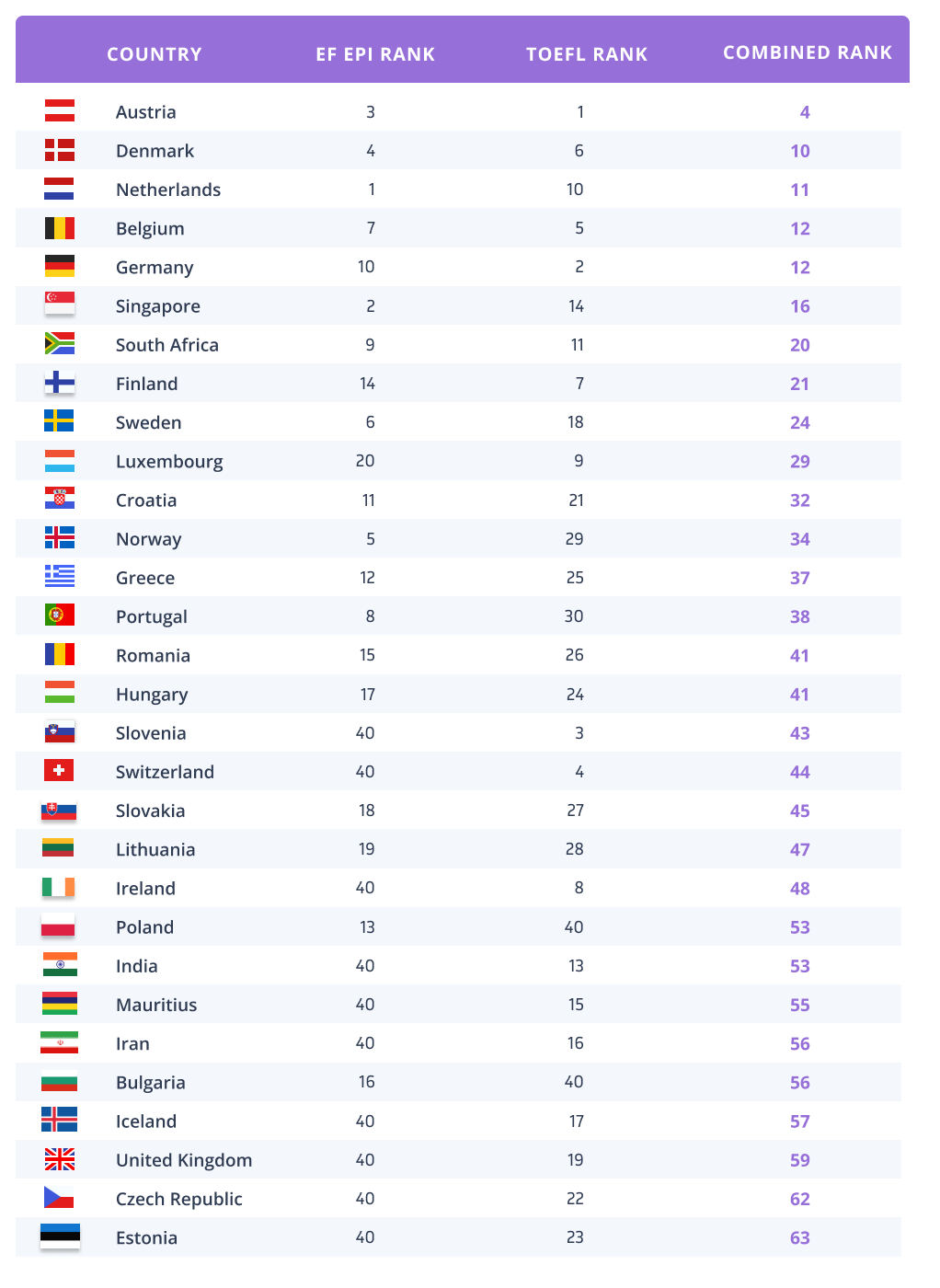
The Netherlands also ranks number one globally for English proficiency among non-native speakers, a position it has held for six consecutive years according to the EF English Proficiency Index. English is not an official language, but it functions as a working language across international business, higher education, and the technology sector.
Top Languages Spoken in the Netherlands
Based on European Commission data published in 2024:
1. Dutch: 97.7%
Dutch is the official language and mother tongue of the vast majority of the Dutch population. It is used in government, education, courts, and all official communications. Standard Dutch, known as Algemeen Nederlands or AN, forms the basis of written language and formal speech across the country, though regional dialects remain alive in everyday conversation across many provinces.
2. English: 85.9%
English is the most widely spoken foreign language in the Netherlands and one of the highest rates of English proficiency among non-native speakers anywhere in the world. It is used across business, higher education, technology, and international organisations.
Many universities offer degree programs entirely in English, and Amsterdam consistently ranks as one of the top cities globally for English proficiency. For international companies entering the Dutch market, English is often the working language, though Dutch remains essential for legal documents, regulatory filings, and consumer-facing content.
3. German: 42.7%
German is the second most widely spoken foreign language in the Netherlands, reflecting the close geographic, cultural, and economic ties between the two countries.
Germany is the Netherlands’ largest trading partner, and German is widely understood across the Dutch population, particularly in the eastern border regions of Gelderland and Overijssel where the two languages have historically overlapped.
4. French: 12.3%
French is spoken as a foreign language across educated and professional populations in the Netherlands. It remains relevant for businesses operating across the European Union and for companies entering the French-speaking Belgian market just across the southern border.
5. Spanish: 3.2%
Spanish is growing in popularity, particularly among younger generations. Its rise is driven by tourism, international business, and the global reach of Spanish-language media and culture.
6. Frisian: 2.8%
Frisian is the co-official language of the province of Friesland in the northwest of the Netherlands. Approximately 450,000 people speak West Frisian, making it the largest regional language in the country. It is taught in Frisian schools, used in local government, and preserved through cultural institutions in Friesland.
Frisian is considered a separate language from Dutch, not a dialect, and its closest relative is English rather than Dutch.
7. Low German: 1.0%
Low German, known in the Netherlands as Nedersaksisch or Low Saxon, is spoken across the northeastern provinces including Groningen, Drenthe, and Overijssel. It is recognised as a regional language under the European Charter for Regional or Minority Languages and shares features with Low German dialects spoken across the border in Germany.
8. Arabic: 0.8%
Arabic is spoken primarily by Moroccan-Dutch communities and more recent migrants from the Arab world. Moroccan Arabic, known as Darija, is the most common variety spoken in the Netherlands.
Arabic is growing in demand for translation and communication services across healthcare, legal, and public sector contexts, particularly in the major cities of Amsterdam, Rotterdam, and The Hague.
Also Read: Top Languages Spoken in Belgium
Need Translation Services for the Dutch Market?
Dutch Dialects Worth Knowing
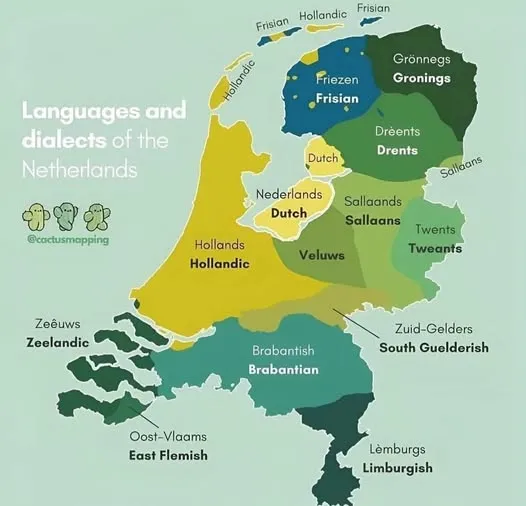
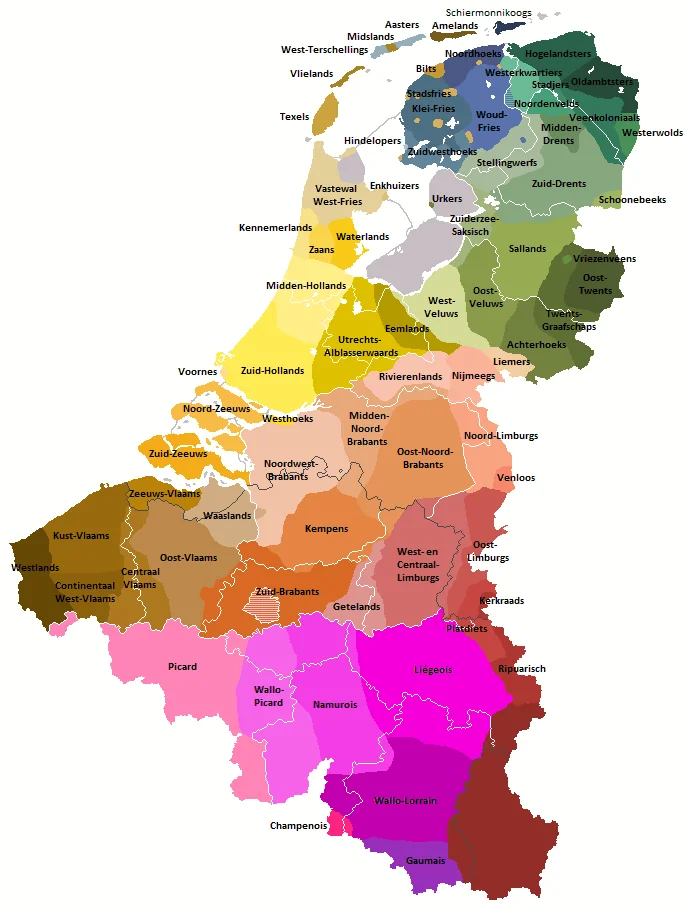
Dutch is not a single uniform language across the Netherlands. According to dialectologist Jo Daan, there are 28 Dutch dialects that can be grouped into six regional clusters. Regional dialects vary significantly in vocabulary, pronunciation, and grammar and some differ enough from standard Dutch that neighbouring dialect speakers can struggle to understand each other.
Hollandic
Spoken across North and South Holland, including Amsterdam, The Hague, and Rotterdam. It is the closest dialect to standard Dutch and one of the most widely recognised in the country. Each city has its own variation, Amsterdams is known for its hard “s” sounds, Haags for its distinct vowel shifts, and Rotterdams for unique local vocabulary that sets it apart from its neighbours.
Brabants
Spoken in the province of North Brabant and one of the most recognisable Dutch dialects. It is known for its soft “g” sounds, making it sound closer to Flemish than standard Dutch. The letter “t” is regularly dropped from the end of words, wat becomes wa, giving the dialect a softer, more relaxed rhythm than standard Dutch.
Limburgish
Spoken in the southern province of Limburg and considered by some linguists to be a separate language entirely. It is more melodic in intonation than standard Dutch, with vocabulary influenced by French and German. Limburgish is recognised as a regional language under the European Charter for Regional or Minority Languages.
Zeeuws
Spoken in the southwestern province of Zeeland. It is known for swapping “ij” and “ui” sounds for “ie” and “uu” and occasionally replacing “g” with “h”, giving it a distinctive sound that sets it apart from standard Dutch. It shares features with Flemish spoken across the border in Belgium.
Gronings
Spoken in Groningen and parts of Drenthe and Overijssel in the northeast. It originates from the Low Saxon dialect and is heavily influenced by German. It can sound rushed or clipped to standard Dutch speakers, some sounds are passed over entirely making it one of the more challenging Dutch dialects to follow for those unfamiliar with it.
Frisian
Spoken in the province of Friesland and different enough from Dutch to be considered a separate language. It is the only language with co-official status alongside Dutch in the Netherlands. Even within Friesland, several sub-dialects exist across islands and municipalities.
For businesses producing content for Dutch-speaking audiences, regional dialect awareness matters, particularly when comparing the Dutch market with Flemish-speaking audiences in Belgium, where vocabulary, tone, and some grammatical conventions differ.
The Role of English in the Netherlands
The Netherlands ranks number one globally for English proficiency among non-native speakers, a position it has held for six consecutive years according to the EF English Proficiency Index. Amsterdam is the top-scoring capital city in the world for English proficiency, with a score of 657 in the 2024 index.
English is used widely across business, higher education, international organisations, and the technology sector. Many Dutch universities offer programs entirely in English, attracting students from across Europe and beyond. English proficiency in the Netherlands is partly a result of early English instruction in schools and a long tradition of subtitling foreign television rather than dubbing it, which means Dutch children grow up reading and hearing English from an early age.
For international companies entering the Dutch market, English is often the working language. However, Dutch remains the required language for regulatory filings, legal documents, consumer product labeling, and government communications.
Also Read: Top Languages Spoken in Dubai
Minority and Heritage Languages in the Netherlands
Frisian
Frisian is spoken by approximately 450,000 people in the province of Friesland. It is the only language with co-official status in the Netherlands alongside Dutch. Used in Frisian schools, local government, and cultural institutions, it represents one of the most actively maintained regional languages in Western Europe. Most inhabitants of Friesland understand Frisian, though fewer can write it fluently.
Turkish
Turkish is spoken by the Turkish-Dutch community, one of the largest ethnic minority groups in the Netherlands, making up around 2.4% of the population. The community is concentrated in Amsterdam, Rotterdam, Utrecht, and The Hague. Turkish has maintained strong intergenerational transmission through community networks, mosques, media, and cultural organisations.
Arabic
Spoken primarily by Moroccan-Dutch communities, Arabic is present across the major cities of the Netherlands. Moroccan-Dutch people make up around 2.4% of the population. The variety most commonly spoken is Moroccan Arabic, known as Darija, which differs significantly from Modern Standard Arabic. Demand for Arabic translation services across healthcare, legal, and public sector contexts continues to grow.
Papiamento and Sranan Tongo
Papiamento is spoken by communities from the Dutch Caribbean islands of Aruba and Curaçao. It is a creole language based on Spanish, Portuguese, Dutch, and English, and is an official language of Aruba and Curaçao within the Kingdom of the Netherlands.
Sranan Tongo is an English-based creole widely spoken in Surinamese communities in the Netherlands. Surinamese-Dutch people make up around 2.1% of the population, with communities concentrated in Amsterdam and The Hague.

History of the Netherlands and Its Linguistic Influence
1. Early History and the Dutch Golden Age
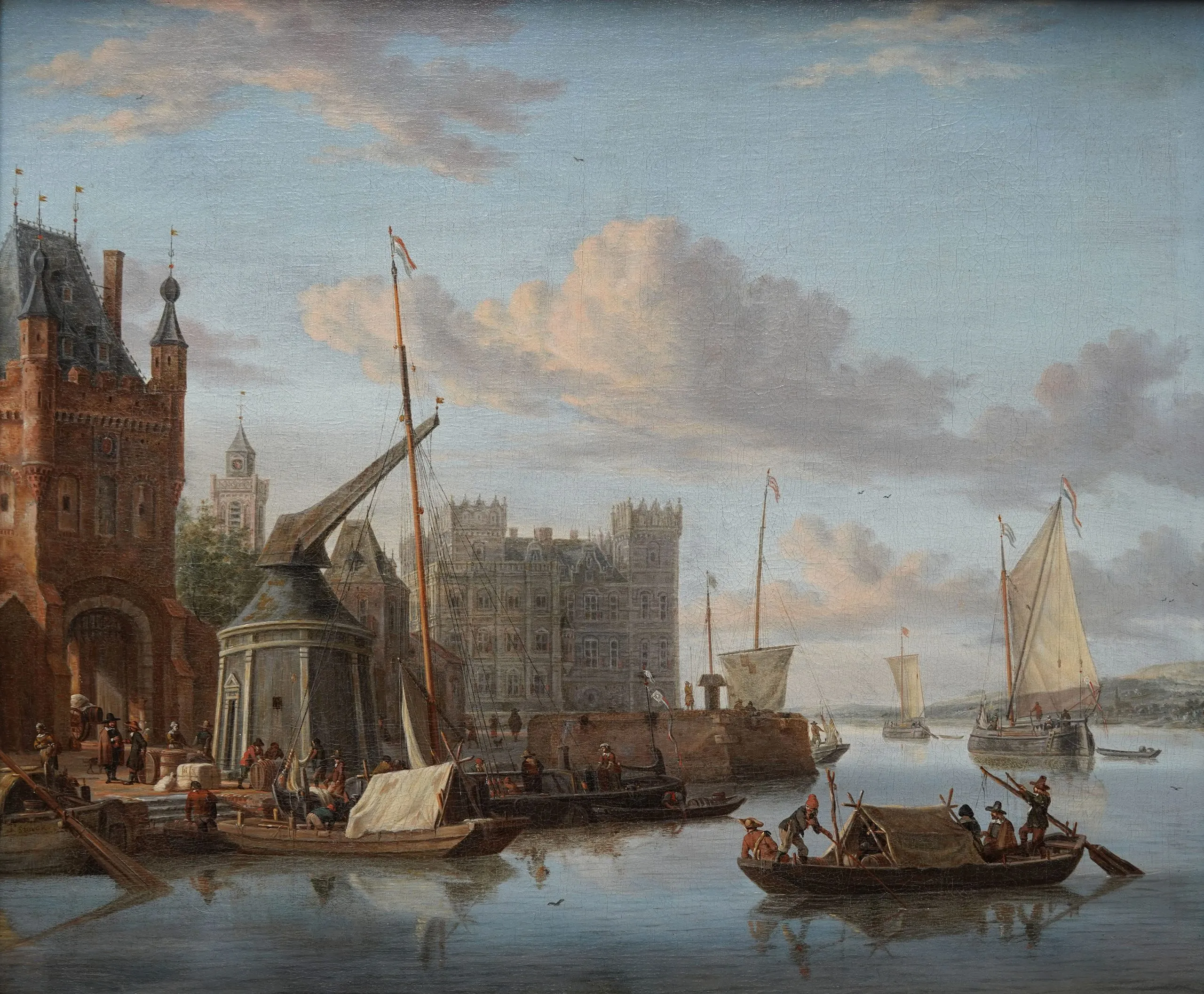
The Dutch language emerged from the Low Franconian dialects spoken across the Low Countries during the medieval period. During the Dutch Golden Age of the seventeenth century, the Netherlands became one of the world’s leading trading and maritime powers. The Dutch East India Company spread the Dutch language across trade routes from the Indonesian archipelago to South Africa, leaving linguistic traces that remain in Afrikaans and in loanwords across many languages.
2. Colonial Era and Language Spread
Dutch colonial expansion carried the language to Suriname, the Dutch Antilles, South Africa, Indonesia, and parts of the Caribbean and Americas. While most of these territories no longer use Dutch as their primary language, the colonial era shaped the linguistic heritage of communities that continue to have ties to the Netherlands today.
3. Post-War Immigration and Language Diversity
The second half of the twentieth century brought significant immigration to the Netherlands. Guest workers from Turkey and Morocco arrived in the 1960s and 1970s, followed by their families. Communities from Suriname and the Dutch Antilles also grew significantly after Suriname’s independence in 1975. This wave of migration transformed the linguistic landscape of Dutch cities and established the multilingual communities that continue to shape Dutch society today.
4. The Netherlands Today
The Netherlands today is a genuinely multilingual society. Dutch remains the foundation of public life, but English, Arabic, Turkish, and dozens of other languages are part of the everyday reality of its major cities. The country’s position at the centre of European trade, logistics, and technology means it continues to attract international talent from across the world, adding to its linguistic diversity.
Language and Education in the Netherlands
Dutch is the primary language of instruction in public schools across the Netherlands. English is introduced as a compulsory subject in primary school and is taught throughout secondary education, contributing to the exceptionally high English proficiency rates the country maintains.
Frisian-language education is available and compulsory in Friesland, where children learn to read and write in Frisian alongside Dutch from primary school onwards.
International schools and English-medium universities attract students and professionals from across the world, particularly in Amsterdam, Rotterdam, Utrecht, and The Hague. The Dutch tradition of subtitling foreign television rather than dubbing it plays a significant role in English acquisition — Dutch children grow up reading English subtitles and hearing English spoken naturally, which builds proficiency in ways that formal education alone cannot replicate.
Also Read: Languages Spoken in New Zealand
Language and Education in the Netherlands
Despite the Netherlands’ exceptional English proficiency, Dutch remains the required language for legal documents, regulatory submissions, consumer product labeling, and government communications. Businesses entering the Dutch market need professional Dutch translation for contracts, compliance documents, and customer-facing content, regardless of how well their own teams speak English.
Companies based in the Netherlands expanding into other European markets need translation into German, French, Spanish, Polish, and other languages. The Netherlands’ position as a European trade and logistics hub means that multilingual communication is a core business requirement, not an optional extra.
Localising for Dutch audiences also means understanding the difference between standard Dutch and the regional dialects and conventions that matter in specific markets. Content that reads naturally in Amsterdam may not land the same way in a Brabants or Frisian context.
Milestone Localization supports businesses operating in the Netherlands and across European markets with professional translation and localization services built on linguistic accuracy and cultural understanding. Whether you need content in Dutch, German, French, Arabic, or any of the other languages spoken across the Netherlands and its neighbouring markets, working with a professional language partner ensures your message reaches the right audience in the right language.
Looking for translation services for the Dutch market? Get in touch
Conclusion
The Netherlands is a small country with a large linguistic footprint. Dutch is the foundation of daily life, government, and commerce but English, German, Frisian, Turkish, Arabic, and many other languages are part of the country’s everyday reality.
For businesses communicating with Dutch audiences or expanding from the Netherlands into new markets, understanding that linguistic diversity is the starting point for effective communication.
FAQS
What is the official language of the Netherlands?
Dutch is the official language of the Netherlands and is used in government, education, courts, and official communications. Frisian has co-official status in the province of Friesland.
How many languages are spoken in the Netherlands?
The Netherlands is home to many languages, including Dutch, English, German, Frisian, Arabic, Turkish, Low German, Papiamento, and Sranan Tongo.
Do Dutch people speak English?
Yes. English is widely spoken in the Netherlands and is commonly used in business, higher education, technology, and international organisations.
What is the difference between Dutch and Flemish?
Dutch and Flemish share the same written standard but differ in vocabulary, pronunciation, and regional expressions. Flemish is primarily spoken in the Flanders region of Belgium
What is Frisian and where is it spoken?
Frisian is a separate language from Dutch and has co-official status in Friesland. West Frisian is spoken by approximately 450,000 people in the province.
What minority languages are spoken in the Netherlands?
Common minority and community languages include Turkish, Arabic, Papiamento, Sranan Tongo, and Low German. Frisian is the only language besides Dutch with official status in the Netherlands.